
A commercial roof is far more than a protective cover over a building. Instead, it is a critical part of the property’s structure, energy performance, safety, and long-term value. Therefore, understanding the commercial roofing installation process in Glen Cove, NY can help property owners, facility managers, and business operators make smarter decisions before starting a roofing project.
In Glen Cove, NY, commercial buildings face changing weather conditions throughout the year. For example, heavy rain, snow, strong winds, humidity, temperature changes, and seasonal storms can all place pressure on a commercial roofing system. Consequently, choosing the right materials and following a careful installation process becomes extremely important.
Elite Roofing & Waterproofing provides commercial roofing solutions designed around the needs of commercial properties. Moreover, professional planning and installation can help reduce avoidable problems while supporting better roof performance over time.
Why Commercial Roof Installation Requires Professional Planning
Commercial roofing projects are different from many residential roofing jobs. Generally, commercial buildings have larger roof areas, more complex drainage requirements, rooftop equipment, penetrations, mechanical systems, and specific business-use considerations.
Therefore, installation should begin with detailed planning rather than immediately removing the existing roof.
A professional roofing team may evaluate:
- Existing roof condition
- Roof size and layout
- Drainage system
- Roof slope
- Existing roofing materials
- Flashing and penetrations
- Rooftop HVAC equipment
- Skylights and vents
- Structural concerns
- Moisture damage
- Building-use requirements
Furthermore, the property’s location and exposure to weather should be considered when selecting the appropriate roofing system.
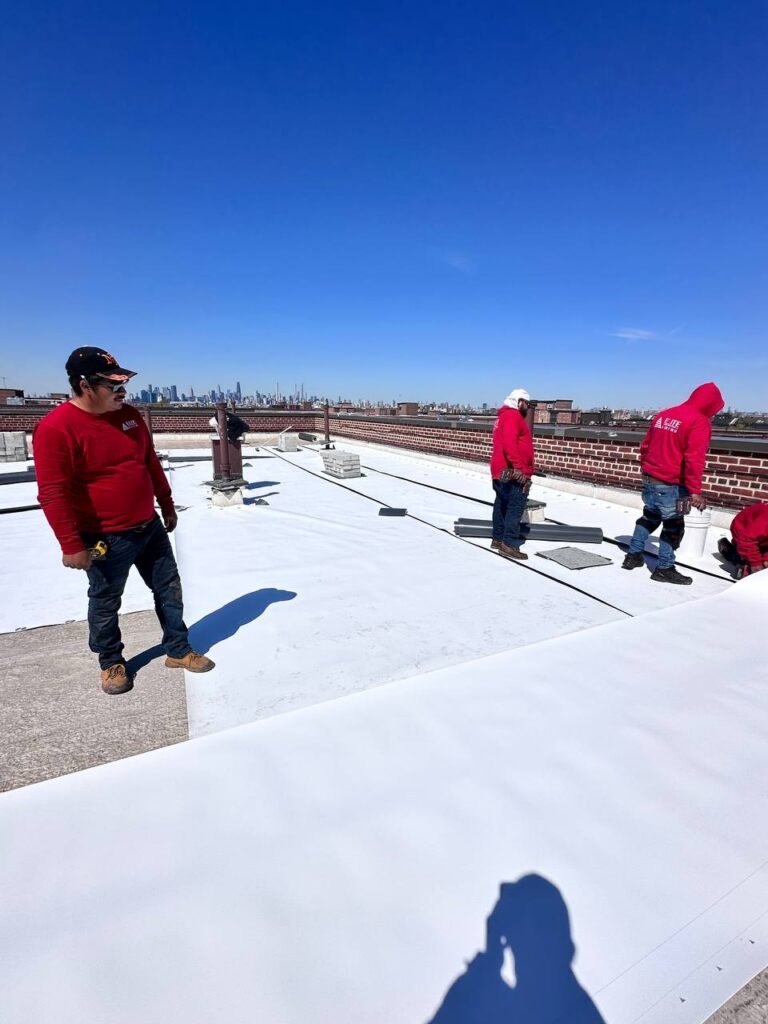
Step One: Initial Commercial Roof Inspection
The first stage of the commercial roofing installation process in Glen Cove, NY is a detailed inspection.
During this stage, the roofing contractor examines the existing roof and identifies visible and hidden concerns. For instance, the inspection may reveal damaged membrane areas, deteriorated flashing, ponding water, cracks, loose materials, or previous repair work.
Additionally, the contractor can determine whether the existing roof can be repaired or whether replacement and new installation would be more practical.
This step is important because every commercial building has different conditions. Consequently, a roofing plan should be based on the actual property rather than a generic installation method.
Step Two: Determining the Right Roofing System
After the inspection, the next step is selecting a roofing system that fits the building.
Commercial properties can use different roofing approaches depending on their design, budget, drainage requirements, maintenance expectations, and long-term goals.
Possible considerations include:
| Roofing Consideration | Why It Matters |
| Roof Size | Determines material quantity and project scope |
| Building Use | Influences durability and access requirements |
| Drainage | Helps manage rain and melting snow |
| Roof Slope | Affects suitable roofing systems |
| Existing Roof | Determines removal or replacement strategy |
| Rooftop Equipment | Requires careful flashing and detailing |
| Weather Exposure | Influences material selection |
| Maintenance Plan | Supports long-term roof performance |
| Budget | Helps determine practical system options |
| Expected Lifespan | Supports long-term investment planning |
As a result, the cheapest option is not necessarily the most cost-effective option. Instead, property owners should consider initial installation expenses alongside expected durability, maintenance, repairs, and future replacement needs.
Step Three: Preparing the Commercial Roof Surface
Once the roofing plan is established, proper preparation begins.
Depending on the property’s condition, preparation may include removing old roofing materials, cleaning the surface, repairing damaged areas, correcting certain drainage issues, and preparing the substrate.
Moreover, roof preparation provides an opportunity to identify problems that may not have been obvious during the initial visual inspection.
For example, moisture trapped underneath an existing roofing system can create serious problems if it is covered without proper evaluation.
Therefore, experienced preparation is essential for creating a reliable foundation for the new roofing system.
Step Four: Addressing Structural and Surface Problems
Before new roofing materials are installed, existing problems should be addressed whenever necessary.
This can include damaged decking, deteriorated insulation, compromised flashing, drainage concerns, or areas affected by moisture.
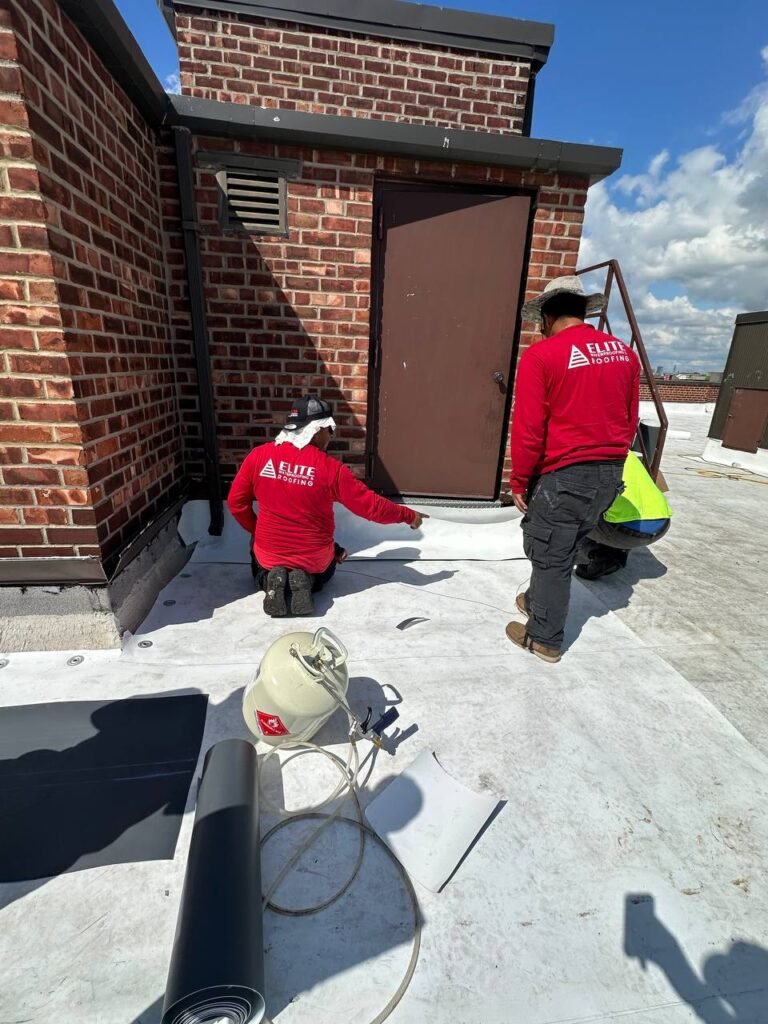
Furthermore, commercial roofs often contain multiple penetrations for HVAC systems, vents, pipes, and other equipment. Each penetration must be properly evaluated and detailed.
If these areas are ignored, water can potentially enter around weak points even when the main roof surface appears to be in good condition.
Consequently, detailed preparation helps create a more dependable finished roofing system.
Step Five: Installing Insulation and Roofing Components
After the surface is properly prepared, the roofing installation can move forward.
Depending on the selected system, insulation and other roofing components are installed according to the project’s specifications.
Proper installation matters because the roofing system works as a complete assembly. The membrane, insulation, flashing, drainage details, seams, edges, and penetrations all need to work together.
Additionally, correct installation can contribute to improved thermal performance and better protection against weather.
Therefore, professional workmanship is particularly important during this stage.
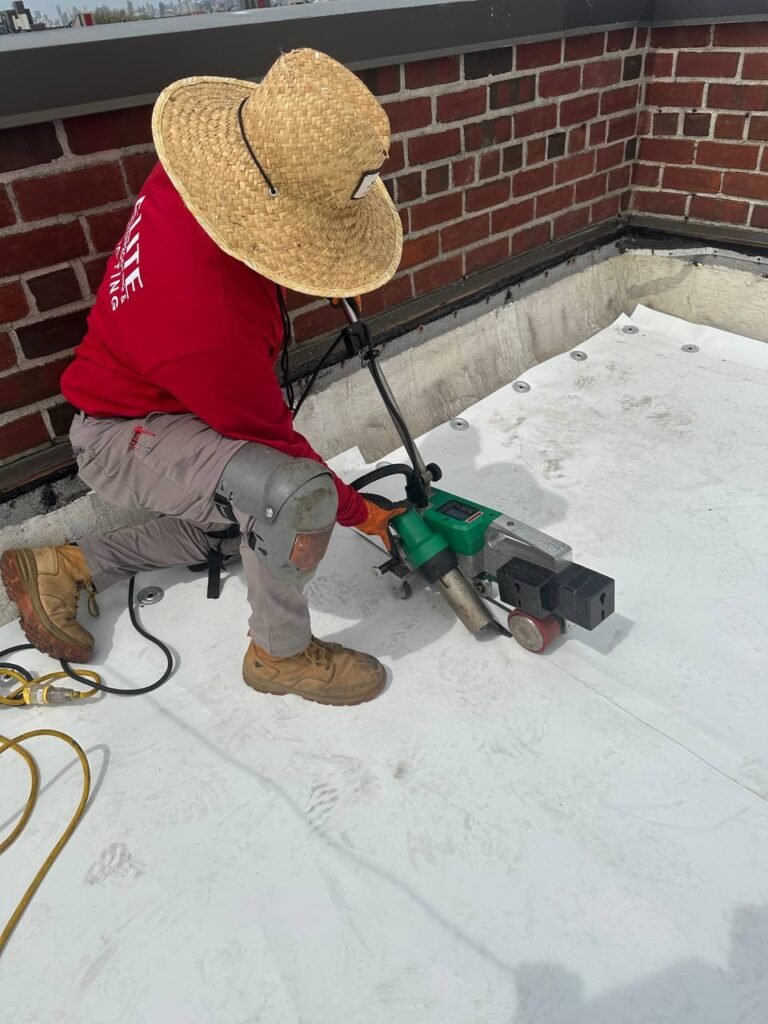
Step Six: Installing the Commercial Roofing Membrane
The roofing membrane or primary roofing material is then installed according to the selected system.
During this stage, attention to seams and transitions is extremely important. Furthermore, edges, corners, penetrations, and other vulnerable locations require careful detailing.
A commercial roof may look complete from a distance, yet small installation defects can create problems later.
For that reason, professional roofers should pay close attention to:
- Membrane placement
- Seams
- Flashing
- Roof edges
- Penetrations
- Drains
- Curbs
- Equipment areas
- Transitions
- Termination points
As a result, detailed installation can help support the roof’s long-term performance.
Frequently Asked Questions About Commercial Roofing Installation
How long does a commercial roof installation take?
The timeline depends on the roof’s size, design, existing condition, material selection, weather, accessibility, and project complexity. Therefore, a professional assessment is necessary before providing a reliable project schedule.
Can a commercial roof be installed over an existing roof?
In some situations, an additional roofing system may be possible. However, this depends on building conditions, existing materials, moisture levels, structural considerations, and applicable requirements. Consequently, the existing roof should be professionally evaluated first.
How do I know whether my commercial roof needs repair or replacement?
Minor localized problems may sometimes be repaired. However, widespread deterioration, repeated leaks, significant moisture damage, aging materials, or extensive system failure may indicate that replacement is more practical. You can also explore professional commercial roof repair services for more information.
What is the most important part of commercial roof installation?
There is no single component that determines everything. Instead, successful installation depends on proper planning, material selection, surface preparation, installation quality, drainage, flashing, seams, and final inspection.
How often should a commercial roof be inspected?
Regular professional inspections can help identify developing problems before they become major repairs. Additionally, inspections are especially useful after severe weather events or when a building experiences unexplained leaks.
Can waterproofing help protect a commercial building?
Yes. Proper waterproofing can help reduce water intrusion risks in vulnerable areas. Therefore, businesses may benefit from professional commercial waterproofing services as part of a broader building protection strategy.
What happens if commercial roof leaks are ignored?
A small leak can potentially contribute to insulation damage, interior deterioration, mold-related concerns, structural deterioration, and business disruption. Therefore, leaks should be investigated and addressed as soon as reasonably possible.
Step Seven: Installing Flashing and Waterproof Details
Flashing is an essential part of commercial roofing.
It helps direct water away from vulnerable transitions and penetrations. For example, flashing may be installed around roof edges, walls, vents, equipment curbs, and other areas where different surfaces meet.
Because water naturally searches for weak points, these details deserve significant attention.
Furthermore, waterproofing around penetrations and transitions can help reduce the risk of future moisture intrusion.
That is why professional waterproofing solutions can complement a properly installed roofing system.
Step Eight: Improving Roof Drainage
Water management is one of the most important aspects of commercial roofing.
Rainwater and melting snow need an effective path away from the roof surface. Otherwise, standing water can place additional stress on roofing materials and increase the potential for leaks and deterioration.
Therefore, during installation, roof drains, scuppers, gutters, slopes, and drainage pathways should be evaluated carefully.
If water repeatedly collects in the same area, property owners should not simply assume it will disappear without consequences. Instead, the underlying drainage condition should be professionally assessed.
Step Nine: Protecting Rooftop Equipment and Penetrations
Commercial roofs frequently contain HVAC units, vents, pipes, electrical equipment, and other installations.
Consequently, roofing work must be coordinated carefully around these components.
A professional installation should account for the location of rooftop equipment while maintaining appropriate protection around penetrations.
Moreover, poor detailing around equipment can become a common source of water intrusion. Therefore, these areas should receive the same level of attention as the main roof surface.
Step Ten: Final Roof Inspection and Quality Check
After the major installation work is complete, a final inspection should be performed.
The roofing team should review the finished system and check important areas such as seams, flashing, drains, edges, penetrations, and visible installation details.
Additionally, the surrounding work area should be checked for leftover materials or debris.
This final step provides an opportunity to identify issues before the project is considered complete.
As a result, quality control can provide additional confidence in the finished roofing system.
Why Commercial Roof Maintenance Still Matters After Installation
A new roof is a major investment. Nevertheless, installation is only the beginning of the roof’s service life.
Regular maintenance can help identify developing issues before they become larger problems.
For example, inspections may reveal:
- Small membrane damage
- Loose flashing
- Blocked drains
- Ponding water
- Damaged seals
- Deteriorating edges
- Rooftop debris
- Minor punctures
- Weather-related damage
Therefore, commercial property owners should establish a maintenance routine after installation.
When Commercial Roof Repair Makes More Sense
Not every roofing issue requires complete replacement.
If the overall roofing system remains in good condition and the damage is limited, targeted repairs may restore performance without the cost of a complete replacement.
However, repeated repairs can become inefficient when a roof is extensively deteriorated.
Therefore, property owners should consider both immediate repair costs and long-term roofing performance.
Elite Roofing & Waterproofing provides commercial and roof repair services for properties experiencing roofing problems.
When Roof Replacement Becomes the Better Option
Sometimes replacement is the more practical long-term solution.
For example, if a commercial roof has widespread deterioration, repeated leaks, extensive moisture damage, or aging materials, continuing to patch individual areas may not provide the desired result.
Instead, a complete replacement can provide an opportunity to install a modern roofing system while addressing underlying issues.
You can learn more about professional roof replacement services when evaluating whether replacement is appropriate for your property.
How Exterior Building Conditions Can Affect Roofing
A commercial roof should not always be evaluated in isolation.
The building’s exterior walls, masonry, joints, openings, and other surfaces can also influence moisture management.
For that reason, property owners dealing with recurring water intrusion may benefit from evaluating the entire building envelope.
Elite Roofing & Waterproofing also provides exterior building restoration services that can address exterior conditions alongside roofing and waterproofing needs.
Why Choose Elite Roofing & Waterproofing?
Choosing a commercial roofing contractor is an important business decision. Therefore, property owners should consider experience, service capabilities, workmanship, communication, and the ability to handle different aspects of a building’s exterior protection.
Elite Roofing & Waterproofing offers commercial roofing along with related services such as residential roofing, roof repair, roof replacement, exterior building restoration, and waterproofing.
Furthermore, having access to related roofing and building-envelope services can make it easier to address problems that extend beyond a single roof component.
For businesses that need dedicated commercial roofing assistance, explore Elite Roofing & Waterproofing’s commercial roofing services.
Benefits of Following a Professional Commercial Roofing Process
A structured installation process provides several important benefits.
First, it creates a clear plan before construction begins. Second, it allows potential problems to be identified early. Third, it helps ensure that different roofing components are installed as one complete system.
Moreover, careful preparation and quality control can reduce the possibility of avoidable installation problems.
The key benefits include:
- Better project planning
- More informed material selection
- Proper surface preparation
- Improved water management
- Better attention to vulnerable areas
- Professional installation
- Thorough final inspection
- Easier long-term maintenance planning
Consequently, the installation process should never be treated as simply placing roofing material over an existing building.
Commercial Roofing Installation Checklist
Before beginning a commercial roofing project in Glen Cove, property owners can use this basic checklist:
| Project Stage | Key Question |
| Inspection | What condition is the existing roof in? |
| Planning | What roofing system fits the property? |
| Preparation | Does the existing surface require repairs? |
| Drainage | Are drains and water pathways functioning properly? |
| Installation | Are materials being installed correctly? |
| Flashing | Are vulnerable transitions properly protected? |
| Penetrations | Are HVAC and other penetrations properly sealed? |
| Quality Control | Has the completed roof been thoroughly inspected? |
| Maintenance | What ongoing maintenance will be required? |
This simple approach can help property owners stay informed throughout the project.
Contact Elite Roofing & Waterproofing
If your commercial property needs a new roof, roof replacement, repair, or waterproofing solution, professional guidance can make the process much easier.
Instead of waiting until a small roofing problem disrupts your business, consider having the roof evaluated and developing a practical plan based on the property’s actual condition.
Elite Roofing & Waterproofing can help property owners explore roofing and exterior protection solutions based on their specific project needs.
To discuss your commercial roofing project, contact Elite Roofing & Waterproofing and learn more about available services.
Final Thoughts on the Commercial Roofing Installation Process in Glen Cove, NY
Understanding the commercial roofing installation process in Glen Cove, NY gives property owners a clearer picture of what happens before, during, and after a commercial roofing project.
From the initial inspection and material selection to surface preparation, installation, flashing, drainage, waterproofing, and final quality control, every stage matters.
Moreover, commercial roofing is a long-term investment. Therefore, selecting suitable materials and working with experienced professionals can be more valuable than focusing only on the lowest initial price.
A properly planned roofing project can help protect the building, its contents, employees, customers, and daily business operations. At the same time, regular maintenance and timely repairs can help preserve the roof after installation.
Ultimately, the strongest commercial roofing strategy is not simply about installing a roof. Instead, it is about creating a dependable system that manages water, withstands weather, supports the building, and provides lasting value for the property owner.