
Choosing the right roofing system is one of the most important decisions a property owner can make. Whether you own a residential home, manage a commercial building, or plan to replace an aging roof, selecting the right material can significantly affect your property’s durability, appearance, maintenance requirements, and long-term value. When comparing a flat roof vs shingle roof in Glen Cove, NY, understanding the differences between these two popular roofing systems can help you make a confident decision.
Glen Cove experiences changing weather conditions throughout the year. From freezing winter temperatures and snowfall to heavy rainfall, summer heat, and occasional coastal storms, local roofs must withstand different environmental challenges. Therefore, choosing a roofing system that matches your property’s structure and weather exposure is essential.
Both flat roofs and shingle roofs offer valuable benefits. However, they serve different architectural needs and perform differently depending on installation quality, materials, drainage, and maintenance.
At Elite Roofing & Waterproofing, we understand the importance of dependable roofing solutions for residential and commercial properties. Consequently, this guide explores the advantages, disadvantages, costs, maintenance considerations, and practical differences between flat and shingle roofing systems in Glen Cove, NY.
Understanding Flat Roofing Systems
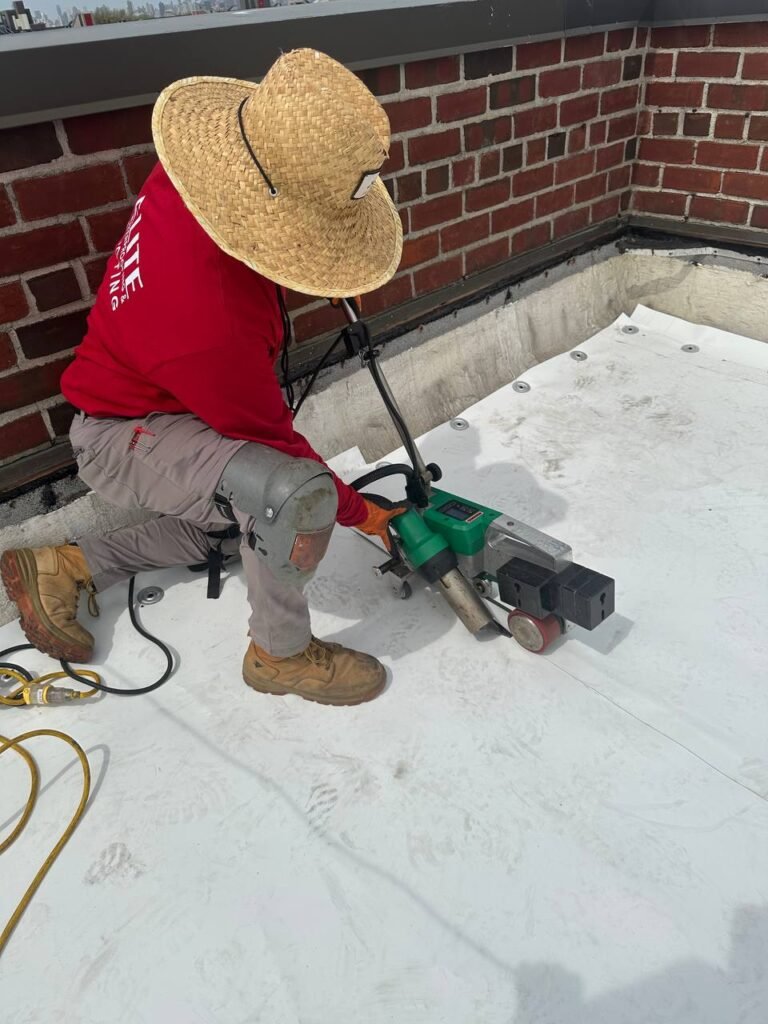
A flat roof is a roofing system with a low slope that appears nearly level compared with traditional pitched roofs. Although it is called a flat roof, it generally includes a slight slope to direct rainwater toward designated drainage points.
Flat roofing systems are especially common on commercial buildings, apartment properties, extensions, and contemporary residential structures.
Moreover, they offer practical advantages for properties that require usable rooftop space or a streamlined architectural appearance.
Popular flat roofing materials include:
- EPDM Roofing: A synthetic rubber roofing membrane known for flexibility and weather resistance.
- TPO Roofing: A single-ply membrane designed to provide a protective roofing surface with reflective options.
- PVC Roofing: A durable membrane commonly used on commercial properties.
- Modified Bitumen Roofing: A multi-layer asphalt-based system designed for dependable waterproofing.
- Built-Up Roofing (BUR): A traditional roofing system consisting of multiple layers of bitumen and reinforcing materials.
Each material has different installation requirements, performance characteristics, and maintenance needs. Therefore, selecting the right flat roofing system requires consideration of your building’s structure and intended use.
Understanding Asphalt Shingle Roofing Systems
Shingle roofing is one of the most recognizable roofing styles for residential properties throughout Glen Cove, NY.
Asphalt shingles are installed in overlapping rows across a sloped roof deck. As a result, rainwater moves downward toward the gutters instead of collecting on the roofing surface.
Furthermore, shingles are available in different colors, styles, and designs, making them a popular option for homeowners who want to improve their property’s exterior appearance.
Common shingle roofing options include:
- 3-Tab Asphalt Shingles: A traditional and generally economical roofing option.
- Architectural Shingles: Thicker, dimensional shingles that provide a more textured appearance.
- Luxury Shingles: Premium products designed to create distinctive architectural styles.
- Impact-Resistant Shingles: Products designed to offer enhanced resistance to certain impact-related damage.
However, not every shingle product provides the same level of protection. Therefore, homeowners should compare manufacturer specifications, wind ratings, warranties, and installation requirements before making a decision.

Flat Roof vs Shingle Roof in Glen Cove, NY: 8 Major Differences
Although both roofing systems protect buildings from outside weather, their construction and performance characteristics are quite different.
Understanding these differences will help you determine which option is more suitable for your property.
1. Weather Resistance and Seasonal Performance
Weather resistance is a major consideration when selecting roofing materials in Glen Cove.
Flat roofs must manage rainwater and melting snow through properly designed drainage systems. Consequently, drainage performance is extremely important, particularly during periods of heavy precipitation.
If drains become blocked or the roofing membrane develops damage, water may accumulate on the surface. Over time, standing water can increase the risk of leaks and material deterioration.
On the other hand, shingle roofs use their sloped design to direct water toward gutters and downspouts. Therefore, they naturally encourage water runoff.
Nevertheless, shingles must be installed correctly to withstand wind, rain, snow, and changing temperatures.
Which is better? Both systems can perform well in Long Island weather when the correct materials, drainage details, and installation methods are used. However, flat roofs require particularly careful drainage planning.
2. Installation Costs and Overall Budget
Budget is another important factor when comparing flat roofing and shingle roofing.
Flat roofing installation costs depend on membrane selection, roof dimensions, insulation, drainage modifications, and existing roof conditions.
Similarly, shingle roofing costs vary according to material quality, roof pitch, architectural complexity, underlayment, flashing, and labor requirements.
For example, a simple flat roof with an accessible surface may involve a different installation process than a large pitched roof with multiple valleys, dormers, and complex flashing details.
| Comparison Factor | Flat Roof | Shingle Roof |
| Typical applications | Commercial buildings and low-slope structures | Residential and pitched roofs |
| Material choices | EPDM, TPO, PVC, modified bitumen | Asphalt and architectural shingles |
| Drainage | Internal drains or roof edges | Gravity-based runoff |
| Design | Modern, low-profile appearance | Traditional residential appearance |
| Maintenance focus | Membrane condition and drainage | Shingles, flashing, and gutters |
| Installation complexity | Depends on membrane and drainage design | Depends on slope and roof geometry |
| Rooftop access | Often easier to access, subject to safety requirements | Usually more challenging |
| Waterproofing | Membrane and seam protection | Shingle layers and underlayment |
Therefore, property owners should compare complete project estimates rather than choosing a roofing system based only on its initial material price.
3. Durability and Expected Lifespan
Durability is essential because replacing a roof is a significant property investment.
A flat roof’s lifespan depends heavily on the membrane material, installation quality, drainage performance, maintenance, and exposure to weather.
For instance, EPDM, TPO, and PVC systems each have different performance characteristics. Furthermore, regular inspections can help identify seam separation, membrane damage, and drainage problems before they become major issues.
Meanwhile, asphalt shingles also offer different expected service lives depending on product quality and environmental conditions.
Architectural shingles generally provide a more substantial construction than basic three-tab shingles. However, severe wind exposure, poor attic ventilation, improper installation, and neglected maintenance can shorten the lifespan of any shingle roof.
Ultimately, neither roofing system automatically lasts longer in every situation. Instead, product selection and professional installation play a major role in long-term performance.
4. Maintenance Requirements
Every roofing system requires maintenance. However, the type of maintenance differs between flat and shingle roofs.
Flat roofs require regular inspection of drainage outlets, membrane seams, flashing, and areas where water may accumulate.
Additionally, leaves, branches, and other debris should be removed to prevent drainage obstructions.
Shingle roofs require inspections for missing shingles, cracked materials, damaged flashing, loose ridge caps, and gutter problems.
Furthermore, homeowners should monitor signs of granule loss and potential moisture damage.
Therefore, regular maintenance is essential regardless of which roofing system you choose.
5. Energy Efficiency and Indoor Comfort
Energy efficiency is another factor worth considering.
Flat roofs can accommodate reflective roofing membranes that help reduce solar heat absorption. For example, certain white TPO and PVC roofing products are designed to reflect a significant portion of incoming sunlight.
However, overall performance also depends on insulation levels, roof assembly design, and ventilation.
Similarly, shingle roofs can provide effective thermal performance when installed with appropriate underlayment, insulation, and attic ventilation.
Consequently, choosing the right roofing material is only one part of creating an energy-efficient building.
6. Appearance and Architectural Design
Your roofing system contributes significantly to your property’s overall appearance.
Flat roofs offer a clean, contemporary appearance that complements modern architecture and many commercial building designs.
Additionally, some flat roof structures can accommodate approved rooftop equipment or other building features.
Shingle roofs, however, provide a more traditional appearance that complements many residential properties throughout Glen Cove.
With several colors and architectural styles available, homeowners can select shingles that coordinate with siding, exterior trim, windows, and landscaping.
Therefore, your building’s architectural design should influence your roofing decision.
7. Water Drainage and Waterproofing
Water management is particularly important in areas that experience heavy rainfall and winter precipitation.
Flat roofs depend on properly designed slopes, drains, scuppers, and membrane systems to move water away from the building.
If drainage is inadequate, water can remain on the surface and increase the possibility of leaks.
Conversely, sloped shingle roofs use gravity to direct water toward the roof edges. Nevertheless, damaged flashing, deteriorated underlayment, missing shingles, and blocked gutters can still allow water intrusion.
In either situation, professional waterproofing and regular inspections can help protect your property.
8. Repair and Replacement Considerations
Repair requirements depend on the type and extent of roofing damage.
Flat roofing problems may involve punctures, membrane separation, damaged seams, flashing failures, or drainage issues.
Meanwhile, shingle roofing problems commonly include missing shingles, wind damage, cracked materials, and deteriorated flashing.
If the damage is limited, targeted repairs may restore roof performance.
However, when widespread deterioration or repeated leaks occur, complete replacement may provide better long-term value.
Frequently Asked Questions About Flat Roof vs Shingle Roof in Glen Cove, NY
1. Is a flat roof better than a shingle roof for homes in Glen Cove, NY?
It depends on your property’s architectural design, roof structure, drainage requirements, and budget. Flat roofs are suitable for low-slope structures, while shingle roofs are commonly preferred for traditional pitched residential roofs. Both can provide dependable protection when properly installed.
2. Which roofing system handles snow better?
Sloped shingle roofs naturally allow snow and melting water to move downward. However, properly engineered flat roofing systems can also perform well in snowy conditions with suitable drainage and structural support. Snow accumulation and roof-loading requirements should always be evaluated professionally.
3. Are flat roofs more expensive than shingle roofs?
Not necessarily. Costs depend on material selection, roof size, installation complexity, and existing conditions. Therefore, a detailed estimate is necessary to compare the actual investment.
4. How long does a flat roof last compared with an asphalt shingle roof?
Both systems have different expected lifespans depending on product specifications, installation, maintenance, and environmental exposure. Premium membranes and architectural shingles may offer different service-life expectations. Always review manufacturer documentation and warranty conditions.
5. Which roofing option requires less maintenance?
Neither system should be ignored. Flat roofs need drainage and membrane inspections, whereas shingle roofs require checks for missing shingles, flashing damage, and gutter problems. Regular maintenance helps prevent expensive repairs.
Why Professional Roofing Services Matter in Glen Cove, NY
Selecting the right roofing material is only the beginning. Even a premium roofing system can experience premature problems when installation is incomplete or important details are overlooked.
For example, inadequate flashing, poor drainage, improperly installed underlayment, and insufficient ventilation can compromise roof performance.
Therefore, property owners should work with experienced roofing professionals who understand different roofing materials and local building requirements.
Elite Roofing & Waterproofing provides roofing-related solutions for residential and commercial properties. Whether you are planning a new installation, addressing an existing leak, or evaluating an aging roofing system, choosing the appropriate service is an important step.
For homeowners, professional residential roofing services can help address roofing needs while considering your property’s structure, appearance, and protection requirements.
For business owners and property managers, commercial roofing solutions provide options for different commercial roofing applications.
Additionally, if your existing roof has developed leaks or visible damage, professional roof repair services can help identify and address the underlying problem.
When an older roofing system reaches the end of its useful life, exploring professional roof replacement services may be the right next step.
Roofing problems can also affect surrounding exterior components. Consequently, exterior building restoration services may be important when evaluating broader property deterioration.
Furthermore, protecting your building against moisture intrusion is essential. Professional building waterproofing services can help address vulnerable areas and support better moisture management.
How to Choose the Best Roofing System for Your Glen Cove Property
Before making your final decision, consider the following practical recommendations.
For Traditional Residential Homes: If your property has a pitched roof and you prefer a classic architectural appearance, asphalt shingles may be a suitable choice. Additionally, architectural shingles offer several attractive design options.
For Commercial Buildings: If your property has a low-slope roof, a suitable flat roofing membrane may provide the performance and design flexibility you need.
For Modern Properties: Flat roofing systems may complement contemporary architecture while offering options for rooftop equipment and approved building features.
Common Roofing Mistakes Property Owners Should Avoid
Even a well-selected roofing system can underperform when important decisions are overlooked.
Here are several mistakes homeowners and commercial property owners should avoid:
- Choosing roofing materials based only on the lowest initial price.
- Ignoring drainage requirements on flat roofs.
- Failing to inspect flashing and roof penetrations.
- Overlooking attic ventilation on shingle roofs.
- Delaying repairs after discovering water stains.
- Hiring installers without verifying relevant experience and credentials.
- Ignoring manufacturer installation requirements and warranty conditions.
- Neglecting routine roofing inspections.
Moreover, property owners should understand that roofing materials alone cannot guarantee long-term protection. Proper installation, suitable ventilation, effective drainage, and ongoing maintenance are equally important.
Contact Elite Roofing & Waterproofing for Professional Roofing Solutions in Glen Cove, NY
Choosing between a flat roof and a shingle roof requires careful consideration of your property’s design, budget, weather exposure, and long-term maintenance expectations.
While flat roofing systems offer practical solutions for commercial buildings and low-slope structures, asphalt shingles remain a popular choice for traditional residential properties.
However, the right decision should always be based on the actual condition and requirements of your building.
Elite Roofing & Waterproofing understands the importance of dependable roofing and waterproofing solutions. Whether you need residential roofing, commercial roofing, roof repairs, complete roof replacement, exterior restoration, or waterproofing, selecting the right professional service can help protect your investment.
Do not wait until minor roofing problems become expensive property damage. Instead, take the next step toward a safer, more reliable, and better-protected building.
Ready to discuss your roofing project?
Visit the Elite Roofing & Waterproofing contact page to get in touch and discuss your property’s roofing requirements.
Make an informed roofing decision today and invest in lasting protection for your Glen Cove, NY property.