
A flat roof offers a clean architectural appearance, practical usable space, and versatile design possibilities. However, unlike a steep-slope roof, a flat roofing system depends heavily on effective drainage to move rainwater away from the building. When water cannot drain properly, it may collect in low areas, place additional stress on roofing materials, and eventually contribute to leaks and structural damage. Therefore, investing in dependable flat roof drainage solutions in Glen Cove, NY is essential for protecting residential and commercial properties.
In Glen Cove, changing weather conditions make proper roof drainage particularly important. Heavy rainfall, seasonal storms, falling leaves, and winter precipitation can all create drainage challenges. Moreover, when drains or scuppers become blocked, water may remain on the roof longer than intended. Consequently, even a small drainage issue can develop into a costly roofing concern if it is ignored.
Elite Roofing & Waterproofing understands the importance of maintaining reliable roofing and waterproofing systems. Whether a property needs drainage improvements, roof repairs, waterproofing, or a more extensive roofing upgrade, choosing the right solution can help preserve the building’s condition.
This guide explains common flat roof drainage problems, practical drainage options, maintenance strategies, and the importance of professional roofing services in Glen Cove, NY.
Why Flat Roof Drainage Is Essential for Glen Cove Properties
Flat roofs are not necessarily completely level. Instead, they are generally designed with a slight slope that directs water toward designated drainage points. These points may include interior roof drains, gutters, scuppers, or other approved drainage systems.
However, when the drainage design is inadequate or the existing components become damaged, water may accumulate instead of flowing away efficiently.
Standing water can create several problems:
- Roof membrane deterioration: Extended water exposure can contribute to premature wear, particularly when roofing materials already have weaknesses.
- Water infiltration: Damaged seams, flashing, or penetrations can allow moisture to enter the building.
- Insulation damage: Water entering beneath the roofing membrane may affect insulation and reduce its effectiveness.
- Interior damage: Persistent leaks can lead to stained ceilings, damaged walls, and deterioration of interior finishes.
- Additional structural stress: Excessive accumulated water adds weight to the roof assembly and may create serious concerns.
- Mold and moisture problems: Continued water intrusion can create conditions that support microbial growth.
Furthermore, drainage problems rarely improve simply by waiting. Therefore, identifying the cause early can help property owners avoid unnecessary repair expenses.
Common Flat Roof Drainage Problems
Before selecting a drainage solution, it is important to understand what is preventing water from leaving the roof. Although several problems may produce similar symptoms, each requires an appropriate assessment.
1. Blocked Roof Drains
Roof drains can become obstructed by leaves, dirt, branches, roofing debris, and other materials. As a result, rainwater may collect around the drain instead of flowing into the drainage system.
Additionally, neglected drain openings may allow debris to accumulate deeper inside the drainage pathway. Consequently, routine inspection and cleaning are important.
2. Improper Roof Slope
A flat roof requires carefully planned drainage slopes. If certain sections are too level or have developed depressions, water may remain in those areas.
Moreover, building movement, previous repairs, or deteriorating roofing materials can sometimes affect how water travels across the roof.
3. Damaged or Undersized Drainage Components
Drainage systems must be suitable for the roof’s size, design, and expected rainfall conditions. However, aging drains, damaged scuppers, and inadequate drainage capacity can interfere with water removal.
Therefore, replacing a damaged component may be necessary, while some properties may require a broader drainage assessment.
4. Clogged Gutters and Downspouts
Some flat roofing systems direct water toward exterior gutters and downspouts. Nevertheless, when these components become blocked or damaged, water may overflow or collect near the roof edge.
Regular cleaning and inspection can help maintain proper water movement.
5. Deteriorated Flashing and Roof Seams
Drainage problems and roof leaks often occur together. For example, water that remains near flashing, seams, or roof penetrations may expose existing weaknesses.
Although improved drainage can reduce prolonged water exposure, damaged roofing details must also be repaired to restore reliable protection.
The Best Flat Roof Drainage Solutions for Commercial and Residential Buildings
There is no single drainage system that works for every flat roof. Instead, the appropriate solution depends on the roof’s layout, size, slope, existing materials, and drainage requirements.
Elite Roofing & Waterproofing can help property owners evaluate roofing concerns and explore suitable roofing and waterproofing services.
1. Interior Roof Drain Systems
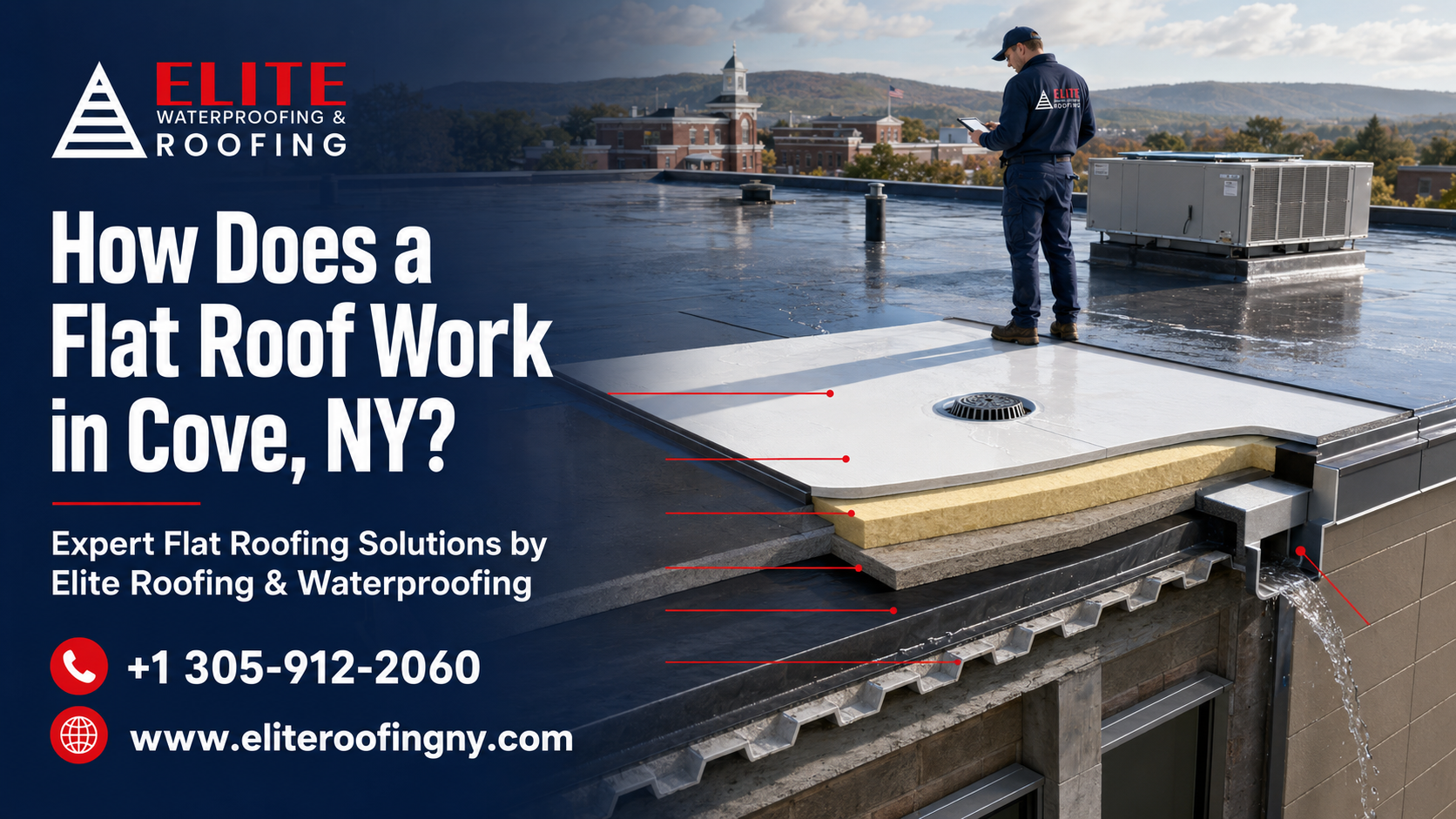
Interior roof drains collect water from designated low points and direct it through drainage pipes. These systems are commonly used on commercial buildings and other structures where exterior drainage is not the preferred design.
However, interior drains must remain clear and properly maintained. Otherwise, blockages can cause water to accumulate around the drainage opening.
A professional inspection should consider the drain condition, surrounding roof membrane, and connection points.
2. Scupper Drainage Systems
Scuppers are openings installed along roof edges or parapet walls. They allow water to exit the roof and flow into an appropriate exterior drainage arrangement.
Depending on the building design, scuppers may serve as primary drainage outlets or secondary overflow provisions.
Nevertheless, their placement, dimensions, and discharge arrangements should be evaluated carefully. Properly maintained scuppers can help reduce water accumulation while supporting an effective roof drainage plan.
3. Gutter and Downspout Improvements
When a roof uses exterior drainage, gutters and downspouts must be capable of carrying water away from the building.
For instance, clogged gutters can cause water to back up near the roof edge. Similarly, damaged downspouts may discharge water too close to the foundation.
Therefore, cleaning, repairing, or improving these components can contribute to better overall water management.
4. Roof Slope Correction
If water repeatedly collects in low areas, correcting the roof slope may be necessary. Depending on the existing construction, a roofing professional may evaluate tapered insulation or other suitable methods to improve drainage direction.
However, simply covering a low area with additional roofing material may not solve the underlying problem. Instead, the complete roof layout should be evaluated to determine how water will reach the drainage points.
5. Secondary Overflow Drainage
Primary drainage systems can become overwhelmed or blocked during severe rainfall. Therefore, certain roof designs incorporate secondary drainage provisions to help manage excess water.
These may include overflow drains or appropriately designed scuppers. Their purpose is to provide an additional pathway for water when the primary drainage system cannot handle the flow.
Importantly, secondary drainage should be designed according to applicable building requirements and the property’s specific conditions.
Frequently Asked Questions About Flat Roof Drainage Solutions
1. Why does water collect on my flat roof after rainfall?
Water may collect because of blocked drains, inadequate roof slope, damaged drainage components, or depressions in the roofing surface. However, the exact cause depends on the roof’s construction and condition. A professional inspection can help identify the issue.
2. Is standing water on a flat roof always a problem?
Not every temporary puddle indicates an immediate roofing failure. Nevertheless, persistent or unusually deep standing water deserves attention. It may indicate drainage limitations, roof depressions, or other concerns that should be investigated.
3. How often should flat roof drains be cleaned?
The appropriate schedule depends on the property’s surroundings, roof design, and debris exposure. However, regular inspections are particularly important after major storms and during seasons when leaves and branches commonly accumulate.
4. Can clogged roof drains cause interior leaks?
Yes. When water cannot drain efficiently, it may remain around roof seams, flashing, and penetrations. If those areas contain weaknesses, moisture may eventually enter the building. Therefore, blocked drains should be addressed promptly.
5. What is the difference between an interior drain and a roof scupper?
An interior drain collects water and directs it through drainage piping inside the building. In contrast, a scupper is an opening through a roof edge or parapet wall that allows water to discharge outside. The appropriate option depends on the building’s drainage design.
6. Can roof waterproofing solve a flat roof drainage problem?
Waterproofing can help protect roofing surfaces and vulnerable building areas from moisture. However, it does not automatically correct blocked drains, poor slopes, or inadequate drainage capacity. Both drainage performance and waterproofing condition should be considered.
7. When should I consider flat roof replacement?
Replacement may be worth evaluating when the roofing system has extensive deterioration, repeated leaks, widespread membrane damage, or repair needs that are no longer practical. Nevertheless, an inspection is necessary to determine whether repair or replacement makes more sense.
8. Are flat roof drainage solutions important for commercial buildings?
Absolutely. Commercial roofs may cover large areas and contain HVAC equipment, penetrations, and other features that affect water movement. Consequently, an effective drainage system and consistent maintenance are important for protecting the building.
How Elite Roofing & Waterproofing Helps Protect Flat Roofs
Selecting the right roofing contractor is an important part of addressing drainage concerns. Although cleaning a blocked drain may resolve a minor issue, recurring water accumulation can indicate a larger problem involving the roofing membrane, slope, flashing, or drainage design.
Elite Roofing & Waterproofing offers roofing and building protection services that can support property owners with different roofing requirements.
Residential Roofing Services
Residential flat roofs require dependable protection against rainwater and environmental exposure. In addition, drainage concerns should be considered alongside the condition of the roof surface and surrounding building components.
Homeowners can explore residential roofing services from Elite Roofing & Waterproofing when evaluating roofing maintenance, repair, or improvement needs.
Commercial Roofing Services
Commercial properties often have larger roof areas and more complicated drainage arrangements. Therefore, proper roof maintenance is particularly important for buildings with multiple drains, HVAC equipment, and rooftop penetrations.
Learn more about commercial roofing solutions for businesses and commercial property owners.
Roof Repair Services
A drainage problem may contribute to leaks, damaged seams, and deteriorating roofing details. However, repairing the visible symptom without addressing the underlying cause may lead to recurring issues.
Elite Roofing & Waterproofing provides professional roof repair services for property owners who need to address roofing damage and related concerns.
Roof Replacement Services
Sometimes, an aging roofing system may require more than localized repairs. For example, widespread membrane deterioration or repeated leakage may indicate that replacement deserves consideration.
Explore roof replacement services to understand the options available when an existing roof has reached the point where repairs may no longer be the most practical solution.
Exterior Building Restoration
Roof drainage is only one part of protecting a building from water-related damage. Additionally, exterior walls, joints, and other exposed surfaces can contribute to moisture problems when they deteriorate.
Through exterior building restoration services, property owners can explore solutions for addressing exterior building conditions that may affect long-term protection.
Waterproofing Services
Effective waterproofing helps protect vulnerable building surfaces against moisture intrusion. Nevertheless, waterproofing and drainage must work together. Even a suitable waterproofing system cannot compensate for a drainage design that allows excessive water accumulation.
Discover professional roofing and building waterproofing services to learn more about protecting your property from water-related concerns.
Flat Roof Drainage Maintenance Checklist for Property Owners
Regular maintenance helps identify potential problems before they become extensive. Although professional inspections remain important, property owners and facility managers can use a basic checklist to organize routine observations.
| Maintenance Item | What to Check | Recommended Action |
| Roof drains | Leaves, dirt, and visible blockages | Arrange appropriate cleaning |
| Scuppers | Debris or visible damage | Inspect and clear obstructions |
| Gutters | Accumulated leaves and sediment | Clean and inspect connections |
| Downspouts | Damage or improper discharge | Arrange repairs where necessary |
| Roof surface | Ponding water and visible depressions | Request a professional assessment |
| Roof seams | Lifting, separation, or deterioration | Have damaged areas evaluated |
| Flashing | Loose or deteriorated sections | Arrange suitable repairs |
| Interior ceilings | Water stains or damp areas | Investigate possible roof leaks |
Furthermore, property owners should document recurring drainage issues. For example, photographs taken after rainfall may help a roofing professional understand where water accumulates and whether the problem appears repeatedly.
However, roof inspections should be performed by qualified professionals using appropriate safety procedures. Walking on a roof without suitable training or protection can be dangerous.
Warning Signs That Your Flat Roof Needs Immediate Attention
Some roofing problems require faster action than routine maintenance. Therefore, knowing the warning signs can help you respond before additional damage occurs.
Watch for the following conditions:
- Water entering the building during or after rainfall.
- Ceiling stains that continue to grow.
- Persistent standing water around roof drains.
- Visible damage around flashing or roof penetrations.
- Loose, separated, or deteriorating roofing seams.
- Water overflowing from roof edges or gutters.
- Repeated leaks in the same interior location.
- Unusual sagging or other signs of possible structural distress.
If you notice these conditions, avoid delaying an inspection. Moreover, if the roof appears structurally unsafe, keep people away from the affected area and arrange an appropriate professional assessment.
How to Choose the Right Flat Roof Drainage Solution
Choosing a drainage improvement should begin with a complete understanding of the roof’s condition. Although a new drain or additional outlet may appear to be a straightforward solution, the overall design must support proper water movement.
Consider these important factors:
Roof Size and Layout: Larger roof areas may require multiple drainage points. Additionally, rooftop equipment and structural features can influence how water travels.
Existing Drainage Design: The current system should be examined to identify blockages, damage, insufficient capacity, or poorly positioned drainage components.
Roofing Material: Different roofing systems have different installation and detailing requirements. Therefore, drainage modifications should be compatible with the existing roof assembly.
Local Weather Conditions: Rainfall patterns and seasonal weather should be considered when evaluating drainage capacity and overflow provisions.
Building Requirements: Drainage work should comply with applicable building codes and relevant design requirements. Consequently, property owners should rely on qualified professionals rather than guessing at drain sizes or outlet locations.
Ultimately, the best solution is the one that addresses the underlying drainage problem while protecting the complete roofing system.
Protect Your Glen Cove Property with Professional Roofing Care
Flat roof drainage is not simply about removing rainwater. Instead, it is an essential part of protecting the roofing membrane, insulation, building structure, and interior spaces.
When drains become blocked, slopes become ineffective, or drainage components deteriorate, water may accumulate and create avoidable risks. Fortunately, timely inspections, suitable drainage improvements, and professional roofing maintenance can help reduce those concerns.
Elite Roofing & Waterproofing offers residential roofing, commercial roofing, roof repair, roof replacement, exterior building restoration, and waterproofing services. Therefore, property owners in Glen Cove, NY, can explore a range of roofing and building protection options when evaluating their needs.
Whether you are dealing with recurring ponding water, suspected drainage damage, or an aging flat roof, start by identifying the cause. Then, consider the most suitable repair or improvement rather than relying on a temporary fix.
CONTACT ELITE ROOFING & WATERPROOFING
Are you looking for dependable flat roof drainage solutions in Glen Cove, NY? Do not let persistent ponding water or recurring roof leaks put your property at unnecessary risk.
Elite Roofing & Waterproofing can help you explore roofing and waterproofing services suited to your property’s requirements. Whether you need residential roofing assistance, commercial roof repair, roof replacement, exterior restoration, or waterproofing, taking action early can help protect your investment.
Contact the team to discuss your roofing concerns and arrange the next step toward a more dependable roofing system.
Visit the Elite Roofing & Waterproofing contact page to submit an inquiry and learn more about available services.
With proper drainage, suitable roofing materials, and consistent professional attention, your flat roof can remain better prepared to handle the changing weather conditions in Glen Cove, NY.