
A commercial roof protects far more than the top of a building. It helps safeguard inventory, equipment, employees, tenants, and daily business operations. However, constant exposure to rain, sunlight, wind, temperature changes, and seasonal weather can gradually weaken roofing materials. As a result, even a roof that once performed reliably may eventually develop leaks, surface deterioration, and rising maintenance needs.Fortunately, commercial roof coating services in Glen Cove, NY can provide a practical option for eligible commercial roofing systems. Rather than automatically replacing an existing roof, property owners may be able to apply a compatible protective coating that helps seal the roof surface, reduce weather exposure, and extend its useful service life.
For businesses, property managers, and commercial building owners, choosing the right roofing solution is an important investment. Therefore, it is essential to understand how roof coatings work, when they are appropriate, and why professional installation matters.
Elite Roofing & Waterproofing provides roofing and building protection services for property owners who need dependable solutions. By assessing the existing roof and its condition, building owners can make more informed decisions about maintenance, coating, repair, or replacement.
What Are Commercial Roof Coating Services?
Commercial roof coating services involve applying a specialized protective layer over a suitable existing roofing surface. Depending on the product and roof system, the coating may help protect against moisture, sunlight, and normal environmental wear.
Unlike a complete roof replacement, coating generally works with the existing roofing assembly. Consequently, it may offer a less disruptive alternative when the roof remains structurally sound and the substrate is suitable for treatment.
However, roof coatings are not appropriate for every building. For example, extensive trapped moisture, deteriorated insulation, structural problems, or widespread roof failure may require more substantial work before a coating can be considered.
Professional assessment is therefore essential. Elite Roofing & Waterproofing offers commercial roofing services to help property owners explore roofing solutions based on their building’s requirements.
Why Glen Cove Businesses Should Consider Commercial Roof Coatings
Commercial properties in Glen Cove experience changing weather throughout the year. In addition to summer sunlight, roofs must withstand rain, wind, cold temperatures, and winter freeze-thaw cycles. Over time, these conditions can affect roofing membranes, seams, flashing, and other vulnerable areas.
Consequently, preventative roof maintenance can be valuable for commercial properties.
First, coatings may help protect suitable roofing surfaces. A properly selected coating creates an additional protective layer over the prepared roof. As a result, the surface may become more resistant to certain forms of weather-related deterioration.
Second, coatings may help address minor surface vulnerabilities. Depending on the coating system, application can improve protection around appropriate roof areas. Nevertheless, existing leaks and damaged components must be evaluated and repaired as required rather than simply covered over.
Third, reflective coatings may help manage solar heat. Some light-colored or reflective products reduce the amount of sunlight absorbed by the roof. Therefore, they may help lower roof surface temperatures and reduce cooling demand under suitable conditions. Actual energy savings, however, depend on insulation, HVAC efficiency, building use, and other factors.
Finally, coating may help postpone replacement. When an existing roof is in suitable condition, a coating system may extend its service life. However, the result depends on proper preparation, product compatibility, application quality, and ongoing maintenance.
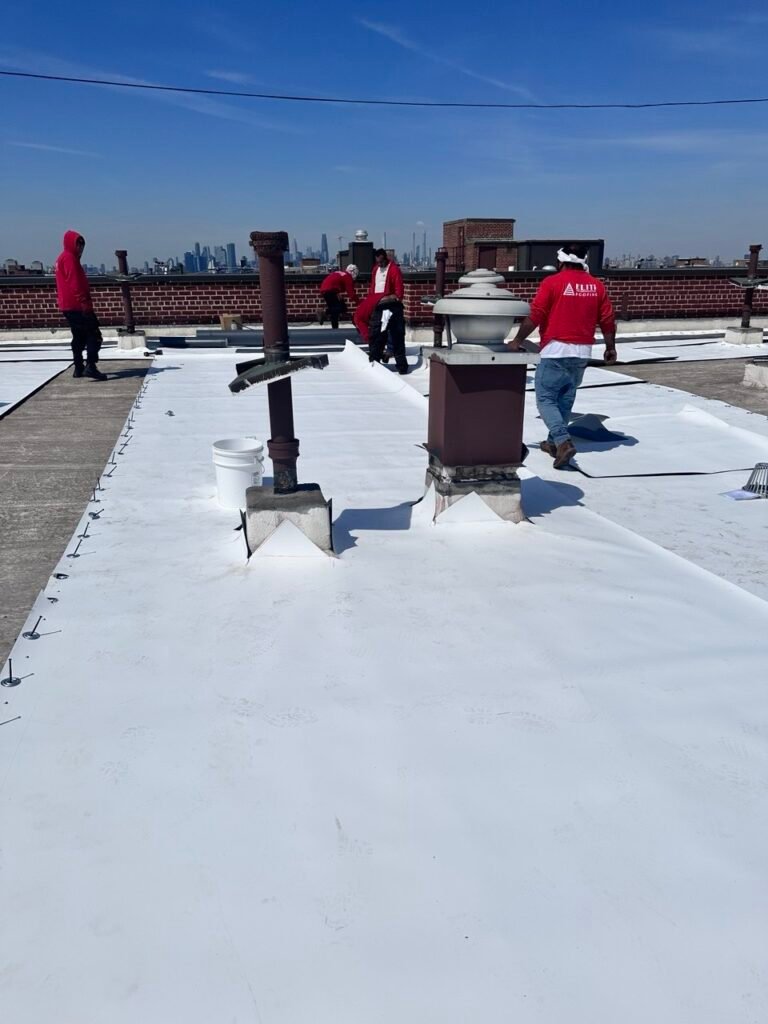
Types of Commercial Roof Coatings
Different coating materials serve different purposes. Therefore, choosing the right product requires consideration of the existing roof, drainage conditions, exposure, and expected performance.
| Roof coating type | Key characteristics | Important considerations |
| Silicone coating | Often selected for moisture resistance and exposure to standing water within the product’s limitations | Drainage conditions, substrate preparation, and product compatibility |
| Acrylic coating | Water-based option commonly used on suitable roofing surfaces | Weather conditions during application and resistance to prolonged ponding |
| Polyurethane coating | Available in formulations designed for durability and resistance to physical wear | Correct formulation, surface preparation, and intended roof use |
| Elastomeric coating | Flexible coating category designed to accommodate some movement in suitable applications | Compatibility with the roof system and expected movement |
| Reflective roof coating | Designed to reflect a portion of incoming solar energy | Reflectivity, climate, roof condition, and expected energy performance |
Importantly, these categories can overlap. For example, some acrylic and silicone products are also reflective or flexible. Consequently, a contractor should recommend a specific system based on the manufacturer’s requirements and the condition of the roof rather than relying on the coating name alone.
Signs Your Commercial Roof May Benefit From a Coating
Not every roofing problem requires a new roof. However, not every roof can be saved with a coating either. Recognizing the difference helps property owners avoid unnecessary expenses and unsuitable repairs.
Watch for these potential warning signs:
- Surface weathering: Roofing materials may show fading, deterioration, or other signs of exposure.
- Minor leaks or vulnerable seams: These areas require investigation and appropriate repairs before coating.
- Increasing maintenance needs: Repeated minor issues may indicate that the roof needs a more comprehensive assessment.
- High roof surface temperatures: A suitable reflective coating may help reduce solar heat absorption.
- An aging but serviceable roof: A roof that remains structurally sound may be a candidate for restoration instead of immediate replacement.
Nevertheless, visible damage should never be ignored. If water has entered the roof assembly, a contractor may need to inspect the insulation and underlying materials before recommending a coating.
For isolated leaks or localized deterioration, professional commercial roof repair services may be the appropriate first step.
Frequently Asked Questions About Commercial Roof Coating
1. How long can a commercial roof coating last?
The service life depends on the coating product, roof condition, installation quality, climate exposure, and maintenance. Therefore, property owners should review the manufacturer’s specifications and ask their contractor about expected performance and maintenance requirements for the proposed system.
2. Can a roof coating stop existing leaks?
A coating may help seal certain suitable roof surfaces, but it should not be treated as a universal solution for active leaks. First, the source of water intrusion must be identified. Then, damaged seams, flashing, penetrations, or other affected areas should be repaired according to the roof system’s requirements.
3. Is roof coating cheaper than roof replacement?
In suitable conditions, coating may cost less than replacing an entire roof because it can preserve parts of the existing system. However, extensive repairs, moisture damage, preparation requirements, and coating specifications can affect the final price. A property-specific estimate is therefore necessary.
4. Can commercial roof coatings help reduce energy costs?
Some reflective coatings can reduce the amount of solar heat absorbed by a roof. As a result, they may help reduce cooling demand in certain buildings. However, savings are not guaranteed and depend on the building’s insulation, ventilation, HVAC system, operating schedule, and local conditions.
5. Can a coating be applied to any commercial roof?
No. Compatibility depends on the existing roofing material, moisture conditions, surface condition, drainage, and coating manufacturer’s requirements. Consequently, a professional inspection should determine whether the roof is suitable.
6. Is roof preparation necessary before applying a coating?
Yes. Proper preparation may include cleaning, removing unsuitable materials, addressing damaged areas, and ensuring the substrate meets the coating manufacturer’s requirements. Without appropriate preparation, adhesion and overall performance may be compromised.
7. When is roof replacement a better option?
Replacement may be more appropriate when the roof has extensive moisture damage, widespread material failure, structural concerns, or deterioration that cannot be reliably addressed through restoration. In these cases, commercial roof replacement services may provide a more suitable long-term solution.
How Professional Commercial Roof Coating Works
A successful coating project involves more than applying material to a roof. Instead, the process should follow a systematic approach that addresses the existing roof’s condition and the coating manufacturer’s requirements.
Step 1: Inspect the Existing Roof
First, the contractor examines the roof surface, seams, flashing, drains, penetrations, and other important areas. In addition, the inspection should identify visible deterioration, water intrusion, and any conditions that could affect coating performance.
This step helps establish whether the roof is a suitable candidate for restoration or requires more extensive repairs.
Step 2: Evaluate Moisture and Drainage
Next, the contractor evaluates drainage and investigates signs of trapped moisture or water intrusion. Although some coating systems can tolerate specific exposure conditions, they cannot correct every underlying drainage or moisture problem.
Therefore, standing water, blocked drains, and damaged roofing layers must be assessed before work proceeds.
Step 3: Clean and Prepare the Surface
After the assessment, the roof is prepared according to the selected system’s requirements. Depending on the roof, this may involve removing dirt, loose material, contaminants, or incompatible substances.
Moreover, the surface must be in a condition that supports proper adhesion. Consequently, preparation is one of the most important stages of the project.
Step 4: Repair Vulnerable Areas
Before coating, the contractor addresses defects that could compromise the finished system. These may include damaged seams, flashing problems, cracks, or other issues identified during inspection.
Where necessary, waterproofing services can also be considered for suitable building protection needs. However, roof coatings and waterproofing treatments must be selected according to the specific surface and intended application.
Step 5: Apply the Selected Coating
Once the surface is ready, the coating is applied according to the manufacturer’s specifications. Application conditions, coverage rates, thickness, and curing requirements can vary between products.
For this reason, professional installation helps ensure that the coating is used as intended rather than applied as a generic surface treatment.
Step 6: Inspect the Completed Work
Finally, the completed coating system should be reviewed for coverage, application quality, and any visible defects. The contractor should also explain applicable maintenance requirements and product documentation.
As a result, the building owner has a clearer understanding of how to care for the roof after the project is complete.
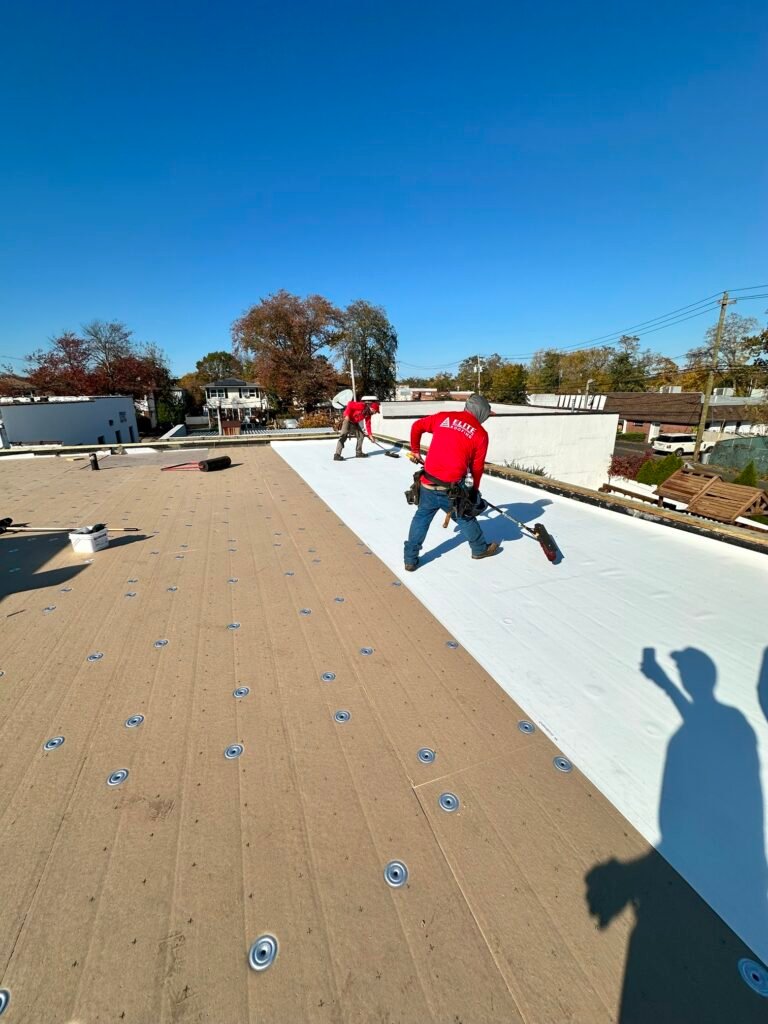
Commercial Roof Coating vs. Roof Replacement
Choosing between restoration and replacement requires a realistic assessment of the existing roof. Although coating can be a valuable option, it is not automatically the best choice for every property.
| Consideration | Commercial roof coating | Commercial roof replacement |
| Existing roof condition | Best suited to roofs that remain suitable for restoration | Considered when the existing system has extensive failure |
| Scope of work | Generally focuses on preparing and coating the existing surface | Involves removing and installing roofing materials as required |
| Project disruption | May be less disruptive, depending on the building and work involved | May involve more extensive construction activity |
| Underlying damage | Does not automatically correct damaged insulation or structural issues | Can allow damaged roof components to be addressed as part of the project |
| Cost | May be more economical when the roof is suitable | Often involves a larger initial investment |
| Best next step | Inspect the roof and verify coating compatibility | Assess the roof’s overall condition and replacement requirements |
Ultimately, the right decision depends on the condition of the entire roofing assembly, not merely the appearance of its surface. Therefore, a detailed assessment is more useful than choosing a coating or replacement based on price alone.
How Commercial Roof Coatings Support Long-Term Building Maintenance
Roof coatings can form part of a broader property maintenance strategy. However, their benefits depend on the condition of the existing roof and the quality of the installation.
For example, a suitable coating may provide an additional protective layer over an existing roof. Furthermore, a reflective product may help reduce solar heat absorption. Together, these features can support the building’s overall maintenance objectives when the system is properly selected.
Nevertheless, coatings do not eliminate the need for inspections. Roof drains can become blocked, flashing can deteriorate, and new damage can develop after severe weather. Consequently, periodic maintenance remains important even after a coating project is complete.
In addition, building owners should keep records of installation details, product specifications, inspection findings, and maintenance work. These records can help property managers evaluate future repair needs and make more informed decisions.
Protecting the Entire Commercial Building
Although the roof is a critical component, water can enter a building through other exterior surfaces as well. For example, deteriorated joints, damaged exterior materials, and vulnerable wall assemblies may contribute to moisture intrusion.
Therefore, property owners should consider the condition of the entire building envelope when investigating recurring water problems. Elite Roofing & Waterproofing also provides exterior building restoration services for suitable building restoration needs.
Likewise, residential property owners who need roofing work for their homes can explore the company’s residential roofing services.
By assessing the relevant roof and exterior components together, owners can better understand where repairs or protective treatments are needed. However, each area should receive the appropriate materials and installation methods for its specific requirements.
How to Choose Commercial Roof Coating Services in Glen Cove, NY
Selecting a roofing contractor is an important part of protecting a commercial property. Therefore, property owners should consider several factors before approving a project.
Experience with commercial roofing: First, ask whether the contractor has experience working with the type of roof installed on your building. Different systems require different preparation and coating methods.
A clear inspection process: Next, look for a contractor who evaluates the existing roof rather than automatically recommending the same solution for every property.
Product compatibility: In addition, ask which coating system is proposed and why it is appropriate for the roof’s materials and condition.
A detailed project estimate: The estimate should explain preparation, necessary repairs, coating application, and any relevant exclusions. Consequently, it becomes easier to compare proposals accurately.
Maintenance and warranty information: Finally, request applicable product documentation, warranty conditions, and maintenance guidance. Keep in mind that warranties vary, and coverage may depend on installation requirements and ongoing maintenance.
A careful selection process helps property owners understand the scope of work and the expected results before committing to a roofing project.
Contact Elite Roofing & Waterproofing for Commercial Roof Coating Services
A well-maintained commercial roof helps protect the building, its contents, and the activities that take place inside. However, weather exposure and aging materials can gradually affect roof performance. Fortunately, when an existing roofing system remains suitable, commercial roof coating may provide a practical way to improve surface protection and support long-term maintenance.
Elite Roofing & Waterproofing offers commercial roofing, roof repair, roof replacement, waterproofing, and exterior restoration services. Therefore, property owners can discuss their roofing concerns and explore an approach suited to their building’s condition.
If you are considering commercial roof coating services in Glen Cove, NY, the first step is to arrange a professional assessment. This allows the roofing team to evaluate the existing surface, identify potential concerns, and determine whether coating, repair, or replacement is the most appropriate solution.
Contact Us: Visit the Elite Roofing & Waterproofing contact page to discuss your commercial roofing needs and request further information about available services.
Protect your investment with a roofing strategy based on the actual condition of your property. With appropriate inspection, preparation, and maintenance, you can make a more confident decision about the future of your commercial roof.