
Hailstorms can arrive quickly, and unfortunately, the damage they leave behind is not always easy to see. While some hail impacts create obvious punctures or cracks, others may weaken a flat roofing system without producing an immediate leak. Therefore, property owners should take hail damage seriously, especially after a strong storm.
For homeowners and commercial property owners searching for flat roof hail damage repair in Glen Cove, NY, a professional inspection can make a significant difference. Instead of waiting for water stains or interior leaks to appear, it is smarter to have the roof evaluated as soon as possible.
Elite Roofing & Waterproofing provides roofing, repair, replacement, commercial roofing, and waterproofing services in Glen Cove and throughout the surrounding Long Island area. The company’s Glen Cove location is listed at 143 Glen St, Glen Cove, NY 11542, and its published service information includes storm-damage roof repairs.
Why Hail Can Be Dangerous for Flat Roofs
Flat roofs have a different design than steep-slope roofing systems. Although they are designed to withstand normal weather exposure, hail can still damage vulnerable components.
When hailstones strike the roof surface, they can create repeated impact points. Depending on the roofing material, storm intensity, hail size, roof age, and existing condition, those impacts may cause bruising, cracks, punctures, membrane damage, damaged flashing, or weakened seams.
Furthermore, hail does not always damage only the most visible part of the roof. It can affect edges, seams, drains, flashing, rooftop equipment, and other components.
Consequently, a roof may appear acceptable from ground level while still having areas that require professional attention.
Common Signs of Flat Roof Hail Damage
After a hailstorm, property owners should look for warning signs. However, because many flat roofs are difficult or unsafe for homeowners to access, a professional inspection is often the better choice.
Potential signs include:
- Visible dents or impact marks
- Cracked roofing materials
- Punctures in the membrane
- Loose or damaged flashing
- Damaged seams
- Water stains inside the building
- New roof leaks
- Pooling water after rainfall
- Damaged roof edges
- Cracked sealants
- Damaged vents or rooftop components
- Interior moisture around ceilings or walls
Moreover, some damage may remain hidden beneath the surface. Therefore, the absence of an immediate leak does not necessarily mean the roof escaped the storm without damage.
How Hail Damages Different Flat Roofing Materials
Not every flat roof reacts to hail in exactly the same way. Instead, the type, age, condition, and installation of the roofing system can influence the severity of storm damage.
Elite Roofing & Waterproofing works with different commercial flat roofing systems, including TPO, EPDM, and modified bitumen roofing.
| Flat Roofing System | Possible Hail Concerns |
| TPO | Punctures, membrane impact damage, seam concerns |
| EPDM | Surface damage, punctures, weakened areas |
| Modified Bitumen | Cracking, surface impact, membrane damage |
| Built-Up Roofing | Damage to layers or protective surface |
| Rubber Roofing | Punctures, tears, impact-related deterioration |
Therefore, the repair approach should be based on the actual roofing system rather than using the same method for every roof.
Why Immediate Inspection After Hail Matters
One of the biggest mistakes property owners can make is assuming that a roof is fine simply because there is no visible leak.
Initially, hail damage may appear minor. However, water can eventually enter through compromised areas. Once moisture reaches insulation, decking, interior finishes, or structural components, the cost of restoration can increase.
Additionally, damaged seams and flashing can become more vulnerable during subsequent rainfall, snow, wind, and temperature changes.
For that reason, scheduling a professional inspection after a significant hailstorm is a proactive step.
What Happens During a Flat Roof Hail Damage Inspection?
A professional inspection should be systematic.
First, the roofing contractor evaluates the overall roof condition. Next, vulnerable areas are examined more closely. Finally, the contractor determines whether the damage can be repaired or whether a larger restoration or replacement project is necessary.
An inspection may focus on:
- Main roof membrane
- Seams
- Flashing
- Roof edges
- Drains
- Penetrations
- Rooftop equipment
- Existing repair areas
- Ponding-water locations
- Signs of moisture intrusion
Furthermore, the age and previous maintenance history of the roof can help provide important context.
Flat Roof Hail Damage Repair vs. Roof Replacement
Hail damage does not automatically mean that the entire roof needs to be replaced.
In some situations, the damage may be limited to specific sections. Therefore, targeted repairs can restore protection without requiring a complete replacement.
However, extensive storm damage may make replacement a more practical long-term option.
| Roof Condition | Potential Approach |
| Minor isolated damage | Targeted repair |
| Damaged flashing | Flashing repair or replacement |
| Small membrane punctures | Localized membrane repair |
| Multiple damaged areas | Comprehensive repair |
| Severe widespread damage | Restoration or replacement evaluation |
| Aging roof with major hail damage | Replacement may be more practical |
| Repeated leaks after repairs | Detailed inspection and replacement assessment |
Consequently, the best decision should come after a professional evaluation rather than being based solely on the appearance of the roof.
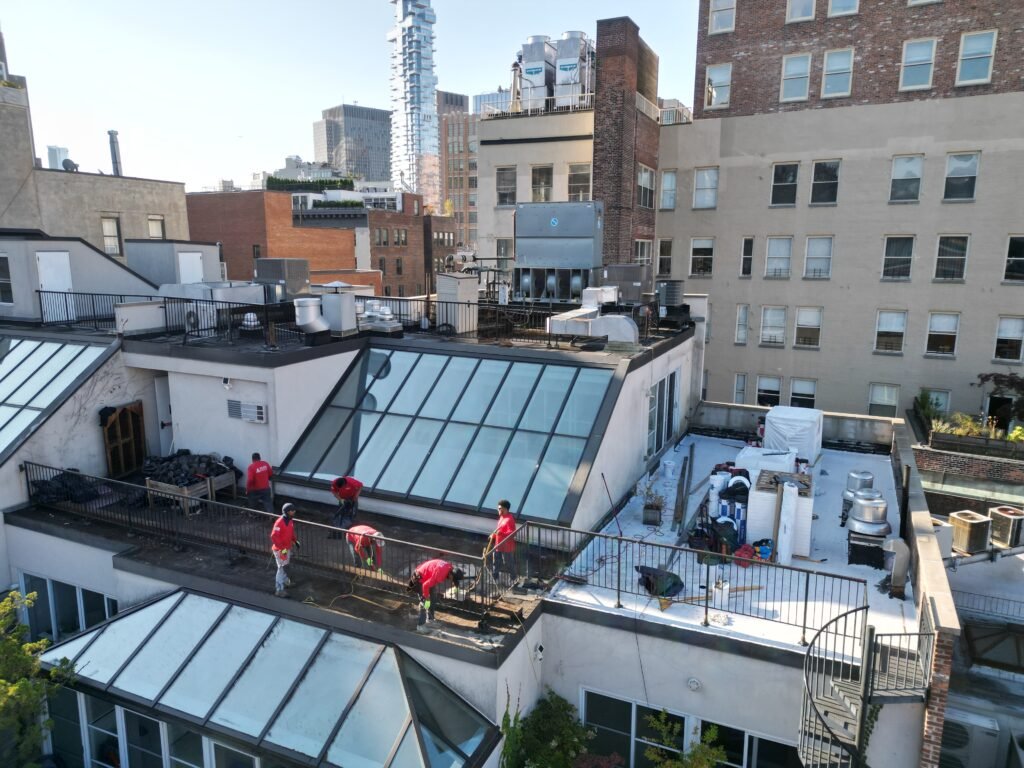
Frequently Asked Questions About Flat Roof Hail Damage
How can I tell if my flat roof has hail damage?
Visible dents, punctures, cracked materials, damaged flashing, loose seams, and new leaks can indicate hail damage. However, some damage is not visible from the ground. Therefore, professional inspection is recommended after a significant hailstorm.
Can hail damage a flat roof without causing an immediate leak?
Yes. Hail can weaken or puncture roofing materials without producing an immediate interior leak. Later, rain or melting snow may enter through those compromised areas.
Does every hailstorm require a roof inspection?
Not every minor storm necessarily causes damage. Nevertheless, if the storm included significant hail, strong winds, or other severe weather, a professional inspection can help identify problems early.
Can a hail-damaged flat roof be repaired?
Yes, depending on the type and extent of the damage. Localized punctures, membrane problems, flashing damage, and other limited issues may be repairable. However, widespread deterioration may require a larger restoration or replacement solution.
How quickly should hail damage be repaired?
It is best to have suspected damage evaluated promptly. Delaying repairs can allow moisture to enter and potentially worsen existing problems, particularly when additional rain or snow follows the storm.
Will hail damage affect my roof’s lifespan?
Potentially. Even when hail damage appears minor, repeated exposure to moisture and weather can accelerate deterioration. Therefore, timely inspection and appropriate repair can help protect the remaining service life of the roof.
Can waterproofing help after hail damage?
Waterproofing can provide additional protection when appropriate, but it should not be treated as a substitute for repairing significant physical damage. A professional should first determine the condition of the roofing membrane, seams, flashing, and other components.
Elite Roofing & Waterproofing also provides professional waterproofing services designed to help protect properties from water intrusion.
Should I repair the roof or replace it after a hailstorm?
The answer depends on the roof’s age, existing condition, extent of hail damage, previous repairs, and overall performance. A relatively sound roof with isolated damage may be repairable, while an older roof with widespread damage may be a better candidate for replacement.
What should I do immediately after a hailstorm?
First, avoid walking on the roof unless you are properly equipped and trained. Next, look for visible signs of damage from a safe location. Then, arrange a professional roof inspection if significant hail occurred.
How can I prevent future flat roof hail problems?
You cannot completely prevent hailstorms, but regular roof inspections and maintenance can help identify vulnerable areas before severe weather occurs. Additionally, keeping drains clear and addressing deteriorated flashing or seams can help maintain overall roof performance.
Why Ignoring Small Hail Damage Can Become Expensive
A small puncture may not seem urgent. Nevertheless, roofing damage can become progressively more serious when water gets underneath the surface.
For example, moisture can affect insulation and decking. Furthermore, repeated wetting can contribute to deterioration and interior damage.
Over time, property owners may face:
- Ceiling stains
- Damaged insulation
- Interior water damage
- Structural deterioration
- Mold-related concerns
- Electrical concerns in affected areas
- Business interruptions
- Larger roofing repair costs
Therefore, early inspection is often a smarter approach than waiting for obvious interior damage.
The Importance of Flat Roof Flashing After a Hailstorm
Flashing deserves special attention because it protects many vulnerable transitions.
Hail can damage or loosen flashing around roof edges, vents, skylights, HVAC equipment, walls, drains, and other penetrations. Additionally, existing flashing that was already aging before the storm may become more vulnerable after repeated impacts.
Elite Roofing & Waterproofing provides flat roof flashing repair services in Glen Cove. The company’s published service information specifically identifies storm damage, aging materials, wind, snow, and other weather-related conditions as potential causes of flashing problems.
Consequently, a post-hail inspection should include more than just the center of the roof surface.
Why Drainage Matters After Hail Damage
Flat roofs depend heavily on effective drainage.
After a storm, hailstones, leaves, branches, and other debris can potentially collect around drains and create blockages. As a result, water may remain on the roof longer than intended.
Standing water can place additional stress on an already damaged roofing system.
Therefore, roof drains and drainage pathways should be inspected after significant storms. Keeping these areas clear can also support better long-term roof performance.
When Roof Repair Is the Smarter Choice
Roof repair can be a practical solution when damage is limited and the underlying roofing system remains in good condition.
For example, localized membrane damage, flashing problems, or specific leak points may be repairable.
Elite Roofing & Waterproofing offers professional roof repair services for roofing problems including storm-related concerns. Its Glen Cove service-area information also identifies roof repair for leaks and storm damage as part of its roofing services.
However, the goal should not simply be to cover up visible damage. Instead, the underlying source should be identified and corrected.
When Roof Replacement May Be Necessary
Sometimes hail damage occurs on a roof that was already near the end of its useful life.
In that situation, repairing individual damaged areas may provide only a temporary solution. Moreover, if the roof has experienced years of weather exposure, previous leaks, repeated repairs, or widespread deterioration, replacement may offer better long-term value.
Elite Roofing & Waterproofing provides complete roof replacement solutions for properties where repair is no longer the most practical option.
Therefore, the decision should consider both the storm damage and the overall condition of the roofing system.
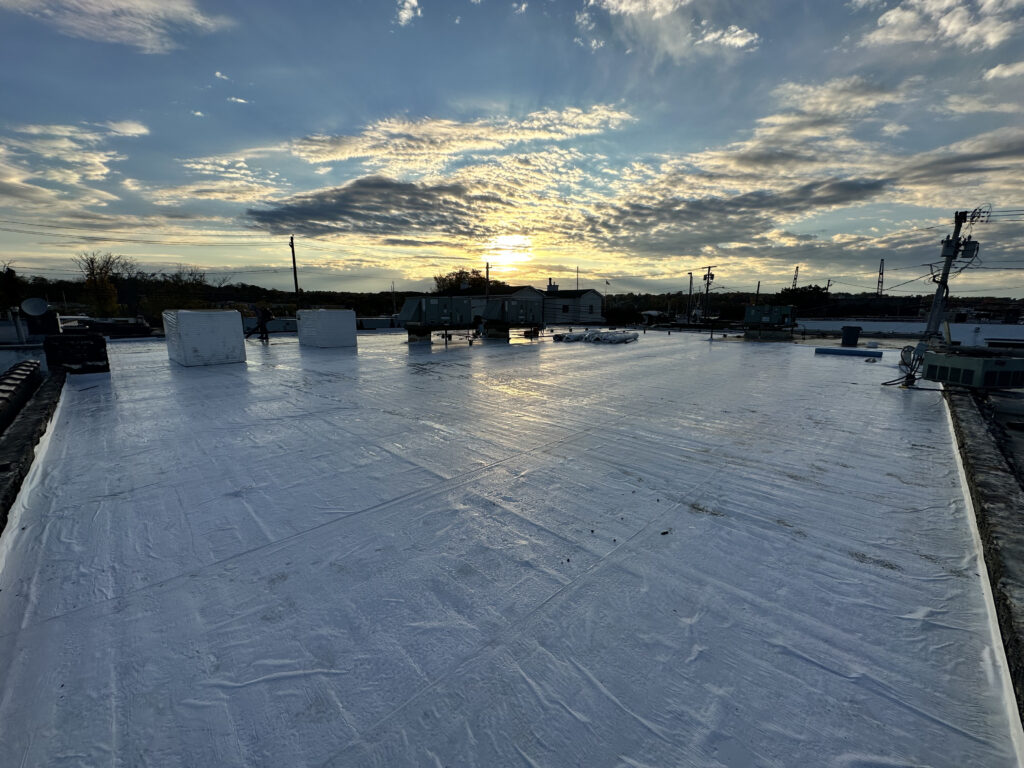
Protecting Commercial Properties From Hail Damage
Commercial flat roofs often cover large areas and may contain HVAC equipment, vents, drains, electrical components, and other rooftop installations.
Consequently, hail damage on a commercial property can have broader implications.
A damaged commercial roof can potentially lead to:
- Interior business disruption
- Equipment exposure
- Inventory damage
- Increased maintenance costs
- Water intrusion
- Operational interruptions
For that reason, commercial property owners should consider professional inspections after significant hail events.
Elite Roofing & Waterproofing provides commercial roofing services designed for businesses and commercial properties. Its published service information identifies flat roofing systems, TPO, EPDM, and modified bitumen among its commercial roofing capabilities.
Why Choose Elite Roofing & Waterproofing for Hail Damage Repair?
Choosing a roofing contractor after a storm is an important decision. Therefore, property owners should look for a company that can evaluate the roof carefully instead of immediately recommending a complete replacement.
Elite Roofing & Waterproofing provides residential and commercial roofing services in Glen Cove. Its published information highlights roof repair, replacement, commercial roofing, waterproofing, inspections, and related exterior services.
Furthermore, the company is located in Glen Cove at 143 Glen St, making it a local option for property owners seeking roofing assistance in the area.
Benefits of Professional Hail Damage Repair
Professional repair offers several potential advantages.
First, it can help identify damage that is difficult to see from the ground. Second, it allows the contractor to determine whether repair or replacement is more appropriate. Third, timely work can help reduce the possibility of additional water-related damage.
Moreover, a detailed inspection can identify other roofing issues that existed before the storm.
The major benefits include:
- Early identification of damage
- Reduced risk of prolonged water intrusion
- Protection of insulation and decking
- Better understanding of roof condition
- More informed repair decisions
- Improved long-term maintenance planning
- Protection of the property’s overall value
How to Prepare for a Roofing Inspection After Hail
Before the roofing contractor arrives, property owners can make the inspection process easier by documenting what they noticed.
For example, take photographs of visible exterior damage from a safe location. Also, document interior water stains, leaks, or ceiling discoloration.
Additionally, note the approximate date of the storm and when you first noticed the problem.
However, avoid climbing onto the roof yourself. Flat roofs can contain slippery surfaces, hidden hazards, and damaged areas that are unsafe to walk across.
Contact Elite Roofing & Waterproofing
If your property has experienced a hailstorm and you suspect roof damage, professional evaluation is the safest way to understand the situation.
Whether you need a targeted repair, flashing service, waterproofing solution, commercial roofing evaluation, or possible roof replacement, Elite Roofing & Waterproofing can assess the condition of your property and recommend an appropriate next step.
You can contact Elite Roofing & Waterproofing to request an inspection or discuss your roofing concerns. The company’s current contact page lists 143 Glen St, Glen Cove, NY 11542 and phone number 516-774-4477.
Final Thoughts on Flat Roof Hail Damage Repair in Glen Cove, NY
Hail damage should never be dismissed simply because the roof is not leaking immediately. Instead, property owners should understand that damage can develop beneath the surface and become more serious as moisture enters compromised areas.
For anyone searching for flat roof hail damage repair in Glen Cove, NY, the smartest approach is to arrange a professional inspection after a significant hail event.
From membrane damage and flashing problems to blocked drains, punctures, weakened seams, and water intrusion, every component deserves careful attention. Furthermore, the best solution is not always a complete replacement. In many cases, timely repairs can restore protection and extend the useful life of the existing roofing system.
On the other hand, when a roof is severely damaged or already nearing the end of its service life, replacement may provide better long-term value.
Ultimately, the goal is simple: identify hail damage early, repair vulnerable areas correctly, protect the building from water intrusion, and maintain the roof before a small problem becomes an expensive emergency.
With professional inspection, proper repairs, and ongoing maintenance, Glen Cove property owners can keep their flat roofing systems better prepared for the next storm.