
Commercial property owners need a roofing system that delivers dependable protection, lasting performance, and excellent resistance to moisture. However, choosing the right roofing material can be challenging because every building has different structural requirements, drainage conditions, and maintenance needs. Fortunately, PVC commercial roofing in Glen Cove, NY, offers an attractive solution for many commercial buildings that require a durable, waterproof, and energy-conscious roofing system.
Polyvinyl chloride, commonly known as PVC, is a single-ply roofing membrane designed to protect flat and low-slope commercial roofs. In addition to its waterproofing capabilities, PVC roofing offers resistance to many chemicals, dependable seam strength, and a reflective surface that can help reduce heat absorption. Consequently, it has become an option worth considering for offices, retail properties, warehouses, restaurants, and other commercial facilities.
For property owners in Glen Cove, changing weather conditions, seasonal precipitation, coastal moisture, and winter temperatures make roof performance especially important. Therefore, selecting the right membrane and ensuring professional installation can help protect the building envelope and reduce the risk of disruptive leaks.
Elite Roofing & Waterproofing helps property owners explore roofing and exterior protection solutions suited to their buildings. Whether you are planning a new commercial roof, evaluating an aging system, or addressing recurring moisture problems, understanding the benefits of PVC roofing can help you make a more confident decision.
What Is PVC Commercial Roofing?
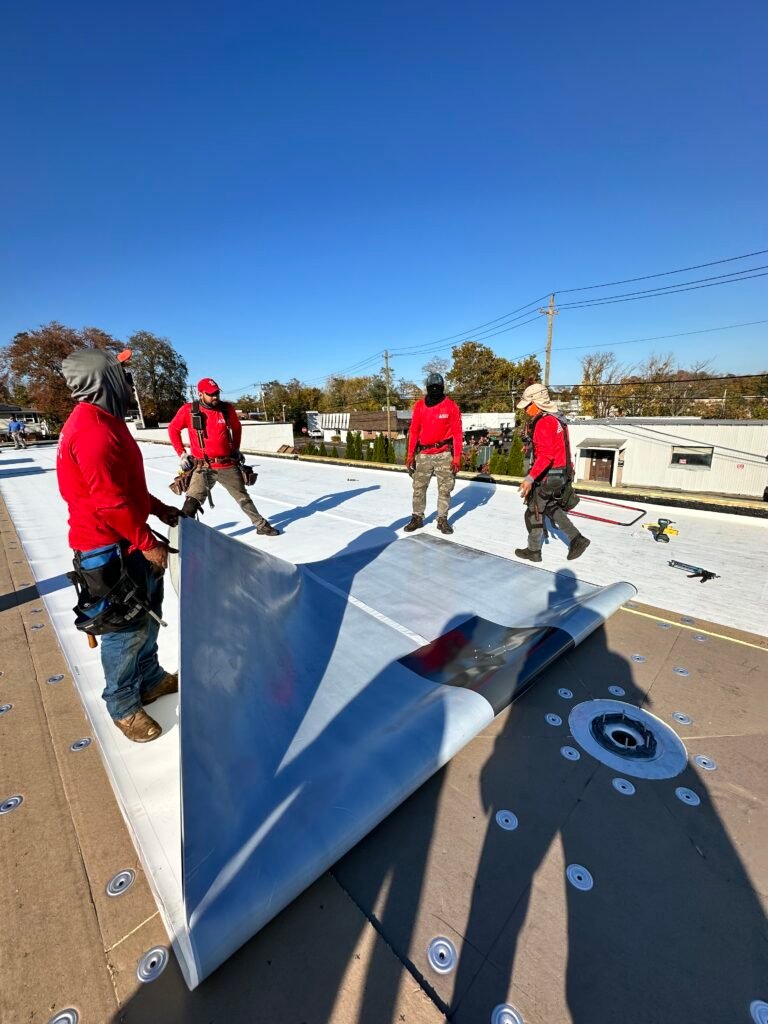
PVC commercial roofing is a single-ply membrane system commonly used on flat and low-slope roofs. The membrane consists of flexible synthetic material designed to create a protective barrier against rain and other environmental exposure.
Unlike traditional roofing materials that rely on overlapping shingles, a PVC membrane is installed in large sheets. The seams are typically joined using specialized hot-air welding equipment, creating a continuous connection when installed correctly. As a result, the finished system can provide strong protection against water penetration.
Furthermore, PVC membranes are available in different thicknesses and system configurations. The appropriate option depends on the building’s design, existing roof condition, insulation requirements, drainage layout, and applicable building codes.
For commercial properties in Glen Cove, PVC roofing may be particularly useful where owners want a lightweight membrane system with reliable waterproofing performance. Nevertheless, the quality of the installation remains essential. Even a high-performance membrane cannot compensate for poor drainage, inadequate detailing, or improperly installed flashing.
To evaluate your property’s options, explore commercial roofing services from Elite Roofing & Waterproofing.
Why PVC Commercial Roofing Is a Smart Option in Glen Cove, NY
Choosing a commercial roofing system requires more than comparing the initial installation price. Property owners must also consider durability, maintenance, energy performance, and the cost of potential disruptions. Fortunately, PVC roofing offers several features that can make it a practical choice for suitable commercial buildings.
1. Excellent Waterproofing Performance
Water infiltration can damage insulation, ceilings, electrical components, inventory, and interior finishes. Moreover, persistent moisture may contribute to mold growth when building materials remain wet.
PVC roofing membranes create a waterproof surface when properly installed and detailed. In addition, heat-welded seams help form strong connections between membrane sheets.
Consequently, a well-designed PVC roofing system can provide dependable moisture protection. However, roof penetrations, drains, edges, and transitions must also be installed correctly to maintain the integrity of the system.
2. Resistance to Many Chemicals
Some commercial buildings experience exposure to oils, grease, or other chemicals. For example, restaurants and certain industrial facilities may need roofing materials that can tolerate specific substances.
PVC membranes generally offer good resistance to many common chemicals compared with some alternative roofing materials. Nevertheless, resistance varies by product and exposure type. Therefore, property owners should verify compatibility with the membrane manufacturer before choosing a system for a building with specialized chemical exposure.
3. Reflective Roofing Performance
Many PVC roofing membranes are available in light-colored finishes that reflect a substantial portion of incoming sunlight. As a result, the roof surface may absorb less solar heat than a darker surface under comparable conditions.
This characteristic can help reduce rooftop temperatures and may lower cooling demand during warm weather. However, actual energy savings depend on insulation, HVAC efficiency, building usage, climate, and other factors. Therefore, reflective roofing should be viewed as one part of an overall building energy strategy.
4. Strong Welded Seams
Seam quality is critical to the performance of a single-ply roofing system. Unlike systems that rely entirely on adhesives or mechanical overlaps, PVC membranes can be heat-welded to create strong, continuous seams.
When installed and tested properly, these seams help limit water intrusion. Furthermore, professional installation allows the roofing team to address corners, edges, drains, and other vulnerable locations with appropriate detailing.
5. A Lightweight Roofing System
PVC membranes are generally lightweight compared with many traditional roofing assemblies. This characteristic can be beneficial when evaluating roofing options for an existing commercial building.
Nevertheless, the total weight of the complete roofing assembly includes insulation, cover boards, attachment systems, and any additional layers. Therefore, the building’s structural capacity and existing roof conditions should be assessed before installation.
Common Commercial Properties That May Benefit from PVC Roofing
PVC roofing can suit a range of commercial applications. However, the best solution depends on how a property is used and what its roof must withstand.
| Commercial property | Potential advantage of PVC roofing | Important consideration |
| Office buildings | Reflective membrane options and waterproofing | Rooftop equipment and penetrations |
| Retail stores | Protection for occupied spaces and inventory | Drainage and perimeter detailing |
| Restaurants | Resistance to many grease-related exposures | Confirm membrane compatibility with specific exposures |
| Warehouses | Large-area membrane installation | Roof access, insulation, and drainage design |
| Medical and professional facilities | Protection for valuable interior spaces | Continuity of waterproofing around equipment |
| Industrial buildings | Potential chemical resistance | Exposure-specific product selection |
| Multi-unit commercial properties | Single-ply protection for low-slope roof areas | Access, maintenance planning, and existing conditions |
For example, a restaurant roof may require particular attention to exhaust outlets and grease exposure. Similarly, a warehouse may have a large roof area where drainage design and membrane attachment are especially important.
Therefore, a professional evaluation should consider the building’s actual operating environment instead of recommending the same roofing assembly for every property.
Frequently Asked Questions About PVC Commercial Roofing in Glen Cove, NY
What is the average lifespan of a PVC commercial roof?
A properly installed and maintained PVC roof may last approximately 20 to 30 years or longer in favorable conditions. However, actual service life depends on membrane quality, installation, weather exposure, maintenance, drainage, and building use. Manufacturer warranties also vary, so property owners should review the specific product documentation.
Is PVC roofing suitable for flat commercial roofs?
Yes. PVC roofing is widely used on flat and low-slope commercial buildings. However, these roofs still need carefully designed drainage because standing water can place additional stress on roofing assemblies and expose installation weaknesses.
Can PVC roofing help reduce cooling costs?
Potentially. Light-colored PVC membranes can reflect sunlight and reduce roof surface temperatures. Nevertheless, the amount of energy saved depends on the entire building envelope, insulation, HVAC systems, occupancy, and local weather conditions.
Is PVC roofing better than TPO roofing?
Neither material is automatically better for every building. PVC may offer advantages in certain chemical-exposure environments, while TPO can be attractive for other commercial applications. Therefore, compare product specifications, compatibility, warranties, installation requirements, and long-term ownership costs before deciding.
Can PVC roofing be installed over an existing commercial roof?
Sometimes. An overlay may be possible when the existing roof assembly is suitable, the structure can support the proposed system, and applicable codes permit it. However, trapped moisture, damaged insulation, excessive roof layers, or deteriorated decking may require removal of some or all of the existing roof.
How do I know when my commercial roof needs replacement?
Recurring leaks, widespread membrane deterioration, wet insulation, extensive seam failures, and repeated repairs can indicate that replacement should be considered. Nevertheless, a professional inspection is needed to determine whether localized repairs or a complete replacement would be more appropriate.
Key Installation Factors That Determine PVC Roof Performance
Even the best roofing material requires a properly planned installation. Therefore, commercial property owners should pay close attention to the details that influence long-term performance.
Roof Inspection and Preparation
First, the existing roof should be evaluated for damage, moisture intrusion, structural concerns, and drainage problems. In addition, the roofing team should determine whether the existing assembly can remain in place or whether removal is necessary.
Without proper preparation, hidden moisture or damaged substrate materials may compromise the new roof. Consequently, the initial inspection is an essential part of the project.
Insulation and Cover Boards
Next, the appropriate insulation and cover board assembly must be selected. These materials contribute to thermal performance, surface stability, and the overall durability of the roofing system.
However, the correct assembly depends on the building’s needs, local energy requirements, manufacturer specifications, and structural limitations. Therefore, material selection should be based on the complete roof design rather than membrane price alone.
Drainage and Water Management
Flat and low-slope roofs need effective drainage. Although PVC membranes provide waterproofing, poorly positioned drains or inadequate roof slopes can allow water to collect.
Over time, standing water may reveal weak points and increase maintenance requirements. For that reason, the drainage layout should be assessed during the design and installation process.
Flashing and Roof Penetrations
Commercial roofs frequently include HVAC equipment, vents, pipes, skylights, and other penetrations. Each opening creates a location where water could enter if the detailing is inadequate.
Therefore, flashing, membrane transitions, and connection points require careful installation. Moreover, these areas should be included in regular maintenance inspections because they often experience concentrated wear.
Seam Welding and Quality Control
Finally, membrane seams must be welded according to the manufacturer’s requirements. Temperature, equipment settings, surface cleanliness, and installer technique can all affect seam quality.
Appropriate quality checks help identify weak welds before the project is considered complete. As a result, professional workmanship can contribute significantly to the reliability of the finished roofing system.
PVC Commercial Roofing vs. Other Roofing Options
PVC is not the only material available for commercial buildings. Depending on the property’s requirements, an owner may also consider TPO, EPDM, modified bitumen, or another suitable roofing assembly.
| Roofing material | Key characteristics | Considerations |
| PVC | Heat-welded seams, reflective options, resistance to many chemicals | Product cost and exposure compatibility |
| TPO | Single-ply membrane with reflective options | Performance depends on product formulation and installation quality |
| EPDM | Flexible synthetic rubber membrane | Seam methods and surface color vary by system |
| Modified bitumen | Multi-layer asphalt-based roofing system | Assembly weight, installation method, and maintenance needs |
| Built-up roofing | Multiple layers that create a robust roof assembly | Greater material weight and installation complexity may apply |
PVC may be a strong candidate when welded seams, reflective performance, and chemical resistance are priorities. However, another system could offer better value depending on the roof’s size, intended use, budget, and existing construction.
Consequently, property owners should compare the complete roofing assemblies rather than choosing based on a single feature. For assistance reviewing commercial roof options, visit Elite Roofing & Waterproofing’s commercial roofing service information.
What Affects the Cost of PVC Commercial Roofing in Glen Cove, NY?
The total cost of a PVC commercial roofing project depends on several factors. Since every building has different dimensions and construction conditions, an accurate estimate requires a property-specific assessment.
| Cost factor | How it affects the project |
| Total roof area | Larger roofs generally require more materials and labor |
| Existing roof condition | Damaged or wet materials may need removal and replacement |
| Membrane thickness | Product specifications can affect material costs |
| Insulation requirements | Additional insulation or cover boards may increase the project budget |
| Roof access | Restricted access may increase labor and equipment requirements |
| Drainage improvements | New drains, tapered insulation, or related work may add cost |
| Flashing and penetrations | Complex roof details require additional installation work |
| Building height and layout | Safety measures and access arrangements can affect labor |
| Warranty requirements | Specified materials and installation standards may influence pricing |
For instance, a large roof with easy access and a sound substrate may require less preparatory work than a smaller roof with extensive moisture damage. Similarly, a building with numerous HVAC units and roof penetrations may require more detailed flashing work.
Therefore, avoid relying on a generic price per square foot as the final project budget. Instead, request a detailed proposal that identifies the roofing assembly, preparation requirements, anticipated repairs, and applicable warranty terms.
Maintenance Tips to Extend the Life of a PVC Commercial Roof
After installation, regular maintenance helps preserve roof performance. Although PVC roofing is designed for durability, it still requires attention to drainage, seams, flashing, and rooftop equipment.
Keep drains and gutters clear. Remove leaves and debris before they restrict water flow. In addition, inspect drainage points after severe weather.
Schedule regular roof inspections. Periodic inspections can reveal loose flashing, membrane damage, and developing leaks before they affect interior spaces.
Check rooftop equipment areas. HVAC contractors and other service professionals may unintentionally damage roofing materials while working on equipment. Therefore, roof access procedures should protect the membrane.
Address damage promptly. Small punctures or localized seam problems may become more serious when left untreated. Consequently, suspected damage should be assessed as soon as practical.
Avoid unapproved repairs. Incompatible sealants, adhesives, and repair materials may affect membrane performance or warranty coverage. Always follow the manufacturer’s approved repair procedures.
Document maintenance activities. Keeping inspection records, repair details, and warranty documents can help property managers plan future work and demonstrate that the roof has received appropriate attention.
Furthermore, property owners should arrange an inspection after severe storms or other events that may have damaged rooftop components. Proactive maintenance is generally more manageable than waiting for water to enter occupied spaces.
When to Consider Commercial Roof Repair or Replacement
Not every roofing problem requires a complete replacement. In many cases, a localized repair can address isolated damage and restore protection. However, widespread deterioration or repeated failures may indicate that a more comprehensive solution is needed.
For example, a small puncture caused by maintenance activity may be repairable if the surrounding membrane remains in good condition. Conversely, recurring leaks across multiple areas, extensive wet insulation, or widespread seam failure may justify evaluating a replacement.
Elite Roofing & Waterproofing provides commercial roof repair services for property owners dealing with roofing problems. When the existing system has reached the end of its useful life, commercial roof replacement options may be worth exploring.
Additionally, water intrusion sometimes affects exterior walls, flashing transitions, and other parts of the building envelope. In these situations, exterior building restoration services may help address related deterioration.
Likewise, where moisture protection extends beyond the roof membrane, specialized building waterproofing services may be relevant.
The best approach is to identify the source of the problem first. Then, compare the expected costs and benefits of repair, restoration, and replacement before committing to a project.
Why Choose Elite Roofing & Waterproofing for Commercial Roofing?
Selecting a commercial roofing contractor is an important investment decision. Property owners need a team that understands the relationship between roofing materials, drainage, flashing, waterproofing, and the building’s overall condition.
Elite Roofing & Waterproofing offers roofing and exterior protection services that can help property owners evaluate their building needs. Moreover, considering roofing and waterproofing together can be valuable when a building experiences recurring leaks or moisture-related deterioration.
When evaluating a roofing proposal, look for a clear explanation of the recommended system, material specifications, preparation requirements, project scope, and warranty conditions. In addition, ask how drainage, roof penetrations, and transitions will be handled.
A well-planned roofing project should address the actual condition of the building rather than simply covering visible problems. Consequently, a detailed assessment can help property owners make informed decisions about performance, maintenance, and long-term costs.
Whether you manage an office, retail property, warehouse, or another commercial building, PVC roofing may offer a worthwhile solution when its features align with your requirements.
Contact Elite Roofing & Waterproofing for PVC Commercial Roofing in Glen Cove, NY
A dependable commercial roof helps protect your building, equipment, employees, tenants, and daily operations. However, selecting the right membrane is only one part of the process. Proper installation, effective drainage, carefully finished seams, and regular maintenance are equally important.
If you are considering PVC commercial roofing in Glen Cove, NY, start by assessing the condition of your existing roof and identifying your property’s waterproofing requirements. Furthermore, compare suitable roofing systems, review the expected scope of work, and request a clear estimate before moving forward.
Elite Roofing & Waterproofing can help you explore commercial roofing, roof repair, replacement, and waterproofing solutions for your property.
Contact Elite Roofing & Waterproofing today: Visit the official contact page to discuss your commercial roofing needs and request information about the services available for your building. With careful planning and appropriate professional support, you can make a more informed investment in reliable roof protection for the years ahead.