
A flat roof can provide a practical, modern roofing solution for residential and commercial properties. However, even a well-maintained roof can develop leaks because of aging materials, damaged seams, deteriorating flashing, clogged drainage systems, or prolonged exposure to changing weather conditions. Unfortunately, these problems are not always visible from inside or outside the building. Therefore, professional flat roof leak detection in Glen Cove, NY is essential for identifying moisture problems early and protecting your property from preventable damage.
Elite Roofing & Waterproofing helps property owners explore roofing, roof repair, roof replacement, and waterproofing solutions. Whether you manage a commercial building or own a home with a flat roofing system, understanding the warning signs of a leak can help you make informed maintenance decisions.
Moreover, a small roof leak can gradually affect insulation, ceilings, interior finishes, and structural components. Consequently, what initially appears to be a minor water stain may eventually require more extensive repairs if the underlying problem remains unresolved.
The good news is that early detection can help narrow down the source of water intrusion and determine the most appropriate repair strategy. Instead of waiting for visible damage to become severe, property owners can arrange a professional assessment and address potential weaknesses before they worsen.
In this guide, discover the common causes of flat roof leaks, the warning signs to watch for, modern detection methods, preventive maintenance strategies, and how Elite Roofing & Waterproofing can help you explore suitable roofing solutions in Glen Cove, New York.
Why Flat Roof Leak Detection in Glen Cove, NY, Matters
Flat roofs are designed with drainage systems and carefully installed roofing materials to manage rainwater. Nevertheless, they are not completely level, and proper drainage remains essential to their performance.
In Glen Cove, roofs experience seasonal weather changes, including rain, wind, cold temperatures, and winter freeze-thaw cycles. Over time, these conditions can place stress on roofing membranes, seams, flashing, and drainage components.
For example, water may enter through a small opening around a roof penetration. Initially, the moisture might remain concealed beneath the roofing membrane or insulation. However, as water travels through building materials, it may eventually appear as a ceiling stain far from the original entry point.
Therefore, locating the actual source of a leak is just as important as repairing the visible damage.
Professional detection helps property owners investigate potential entry points, evaluate the roof’s condition, and identify whether localized repairs or more comprehensive improvements are necessary. Furthermore, early intervention may help limit interior damage, reduce unnecessary repair work, and extend the useful life of an otherwise serviceable roofing system.
What Causes Flat Roof Leaks in Glen Cove Properties?
Before selecting a repair method, it is important to understand why flat roofing systems develop leaks. Although every property is different, several common problems can allow water to penetrate the roof assembly.
1. Damaged Roofing Membranes
The roofing membrane acts as a protective barrier against water intrusion. However, over time, it may develop punctures, splits, blisters, or deteriorated areas.
Foot traffic, fallen branches, installation defects, and normal material aging can contribute to these problems. Additionally, repeated exposure to weather can gradually weaken vulnerable sections of the membrane.
Even a small opening may allow water to reach the layers beneath the roof surface. Consequently, a professional inspection can help identify damage before it spreads or becomes more difficult to repair.
2. Separated Seams and Roof Joints
Many flat roofing systems rely on seams to connect individual membrane sections. If these seams separate, weaken, or become improperly sealed, water may enter through the affected joints.
Furthermore, changes in temperature can cause roofing materials to expand and contract. Over time, this movement may place additional stress on vulnerable connections.
Because seam problems are not always easy to identify from ground level, a detailed roof assessment is valuable when leaks recur after rainfall.
3. Faulty Flashing Around Roof Penetrations
Roof flashing helps protect areas where the roofing system meets walls, vents, pipes, skylights, and other penetrations.
However, damaged flashing, deteriorated sealants, and poor installation can create pathways for moisture. As a result, leaks may develop even when the main roofing membrane appears to be in reasonable condition.
Therefore, an effective inspection should include these transition points rather than focusing exclusively on the central roof surface.
4. Clogged Drains and Poor Water Flow
Flat roofs depend on properly functioning drainage systems to remove rainwater. When drains, scuppers, or gutters become obstructed by leaves, dirt, or debris, water may accumulate on the roof.
Although some temporary water retention may be permitted by a roofing system’s design, persistent ponding can indicate a drainage or slope problem. Moreover, standing water can place additional stress on roofing materials and increase the consequences of existing defects.
Regular maintenance is therefore essential, particularly after storms and during seasons when debris accumulates.
5. Deteriorating Roofing Materials
Every roofing material has a finite service life. Over time, exposure to sunlight, temperature fluctuations, moisture, and repeated weather events can contribute to deterioration.
For instance, older membranes may become brittle, coatings may wear away, and previously repaired sections may begin to fail again.
In these circumstances, identifying the extent of deterioration helps determine whether targeted repairs remain practical or whether roof replacement deserves consideration.
6. Moisture Trapped Beneath the Roof Surface
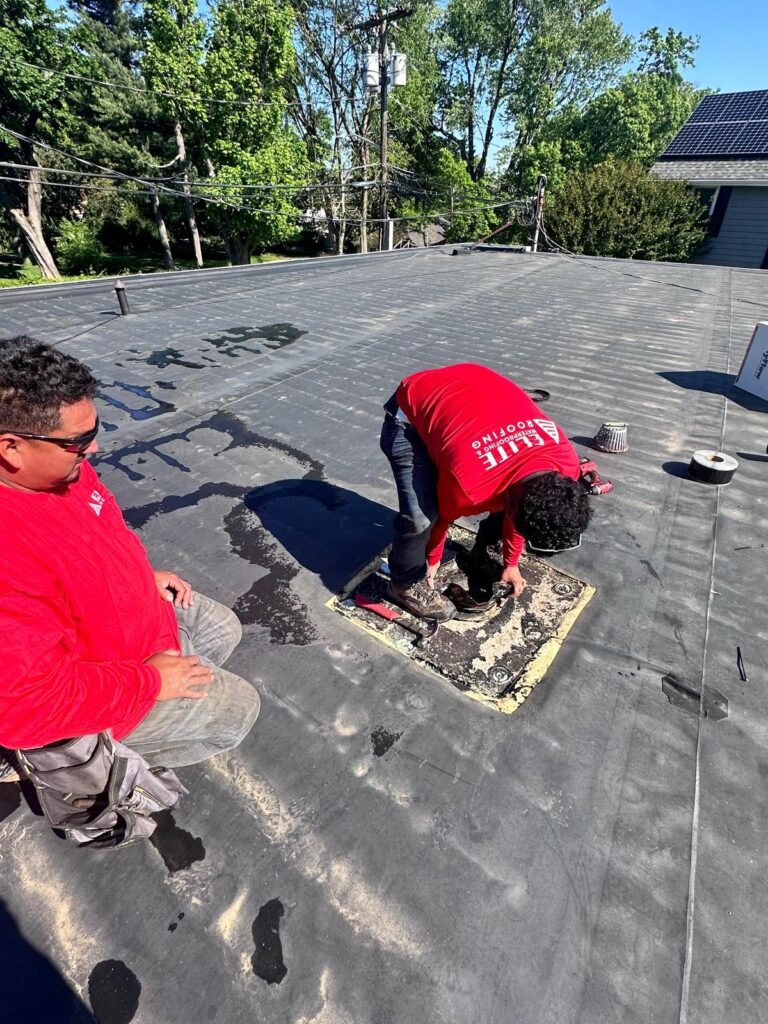
One of the most challenging flat roof problems involves moisture that becomes trapped beneath the visible roofing layer.
This moisture may affect insulation, reduce thermal performance, and contribute to deterioration within the roof assembly. Nevertheless, the roof surface may not show an obvious opening directly above the affected area.
Consequently, professional leak detection may require more than a visual inspection. Depending on the roof’s construction and condition, specialized testing may help identify concealed moisture and narrow down the areas requiring further investigation.
Frequently Asked Questions About Flat Roof Leak Detection
How can I tell if my flat roof has a hidden leak?
Common warning signs include recurring ceiling stains, damp insulation, peeling paint, musty odors, bubbling roofing materials, and unexplained interior moisture. However, these symptoms do not always identify the exact entry point. A professional assessment can help determine whether the roof is responsible and locate potential problem areas.
Can a flat roof leak without visible damage?
Yes. Water can enter through small defects, travel beneath the roofing membrane, and appear inside the building some distance from the original entry point. Therefore, the absence of an obvious hole does not necessarily mean the roof is watertight.
How quickly should a flat roof leak be inspected?
Arrange an inspection as soon as practical after discovering a suspected leak. Meanwhile, protect belongings from dripping water if it is safe to do so. If water is near electrical equipment or the ceiling appears unstable, keep people away from the affected area and contact the appropriate professionals.
Does every flat roof leak require a complete replacement?
No. A localized defect may be repairable if the surrounding roofing materials remain in suitable condition. However, widespread deterioration, recurring leaks, or extensive moisture beneath the membrane may indicate that more comprehensive work is necessary. An inspection can help establish the most appropriate option.
Can regular maintenance prevent flat roof leaks?
Maintenance can reduce the risk of avoidable problems by identifying damaged seams, clearing drainage pathways, and addressing deteriorating flashing. Nevertheless, maintenance cannot eliminate every roofing risk, so periodic professional assessments remain valuable.
How Professionals Detect Hidden Flat Roof Leaks
Finding a roof leak requires a systematic approach because the visible symptoms may not correspond to the original source. Therefore, roofing professionals may use several inspection methods depending on the building, roofing material, and suspected problem.
Visual Roof Inspections
First, an inspector examines accessible roof areas for visible signs of deterioration. These may include punctures, membrane separation, damaged flashing, deteriorated sealants, loose roof components, and areas where water accumulates.
Additionally, the inspector may review drainage points and the condition of roof penetrations. Although a visual inspection can reveal many common defects, it may not identify every instance of concealed moisture.
For this reason, further testing may be appropriate when the cause remains unclear.
Interior Moisture Assessment
Next, the inspection may include the building’s interior. Ceiling discoloration, damp insulation, peeling finishes, and moisture around roof penetrations can provide clues about the leak’s location.
However, water can travel along structural components before becoming visible. Consequently, inspectors must consider the building’s layout and the relationship between exterior roof defects and interior symptoms.
Combining interior observations with exterior findings can help narrow the investigation.
Infrared Thermography
Depending on the roofing system and environmental conditions, infrared equipment may help identify temperature patterns associated with potential moisture beneath a roof surface.
However, infrared images do not automatically prove that water is present. Sun exposure, insulation differences, and other conditions can affect the readings.
Therefore, thermographic findings should be interpreted by a qualified professional and confirmed using suitable methods when necessary.
Electronic Leak Detection
Certain roofing systems may be suitable for specialized electronic leak detection methods. Depending on the membrane and roof assembly, these techniques can help identify potential breaches that are difficult to see during a standard inspection.
Nevertheless, not every roof is compatible with every testing method. The appropriate technique depends on the roofing materials, construction, accessibility, and suspected failure.
Ultimately, the purpose of professional testing is to gather enough reliable information to guide the repair decision rather than relying on guesswork.
What Happens After a Roof Leak Is Found?
Once the source of water intrusion has been identified, the next step is to determine the appropriate response. The repair process depends on the severity of the damage, the roof’s age, the condition of surrounding materials, and the extent of moisture exposure.
For a small, isolated defect, localized repairs may be sufficient. For example, a contractor may repair a damaged membrane section, correct a flashing problem, or address a defective seam.
However, if the inspection reveals widespread deterioration, multiple failed areas, or substantial moisture beneath the roof, more comprehensive work may be necessary.
In addition, the interior damage should be evaluated separately. Wet insulation, damaged ceiling materials, and affected finishes may require drying, removal, or replacement depending on their condition.
This is why locating the leak is only the first step. A successful solution must also address the underlying defect and any related damage that has already occurred.
Property owners seeking assistance with localized problems can explore Elite Roofing & Waterproofing’s professional roof repair services.
Flat Roof Repair or Replacement: Which Option Makes Sense?
Choosing between repair and replacement requires an assessment of the roof’s overall condition rather than simply comparing the immediate costs.
| Consideration | Roof repair | Roof replacement |
| Extent of damage | Often suitable for isolated defects | May be appropriate for widespread deterioration |
| Roof age | Can be practical when materials remain serviceable | Worth considering when the roof approaches the end of its useful life |
| Recurring leaks | May help when the source is clearly identified | May be necessary when failures occur across multiple areas |
| Moisture beneath the roof | Depends on the extent and location | May be appropriate when significant portions of the roof assembly are compromised |
| Long-term planning | Can extend the service life of a suitable roof | Provides an opportunity to install a new roofing system |
Nevertheless, these are general considerations rather than fixed rules. A relatively new roof may require extensive repairs after severe damage, while an older roof may remain serviceable if its condition is good.
Therefore, request a clear assessment of the roof’s condition, the proposed work, and any available alternatives before making a final decision.
When a roof has extensive deterioration, explore flat and other roof replacement options with a qualified roofing professional.
Residential Flat Roof Leak Detection and Repair
For homeowners, a leaking flat roof can affect comfort, property condition, and daily routines. Water may damage ceilings, insulation, walls, and personal belongings. Furthermore, moisture that remains concealed can create additional repair needs over time.
Residential roof inspections should therefore consider both the roof surface and the areas where water may enter the building.
For example, an addition, garage, porch, or other flat-roofed section may have different drainage characteristics from the main roof. Consequently, the inspection should reflect the design and materials of the specific structure.
In addition, homeowners should understand whether the proposed repair addresses the original cause or merely covers the visible symptoms.
Elite Roofing & Waterproofing provides residential roofing services for property owners exploring roofing solutions. Discussing the condition of your roof with a professional can help clarify which repairs or improvements may be appropriate.
Commercial Flat Roof Leak Detection for Glen Cove Businesses
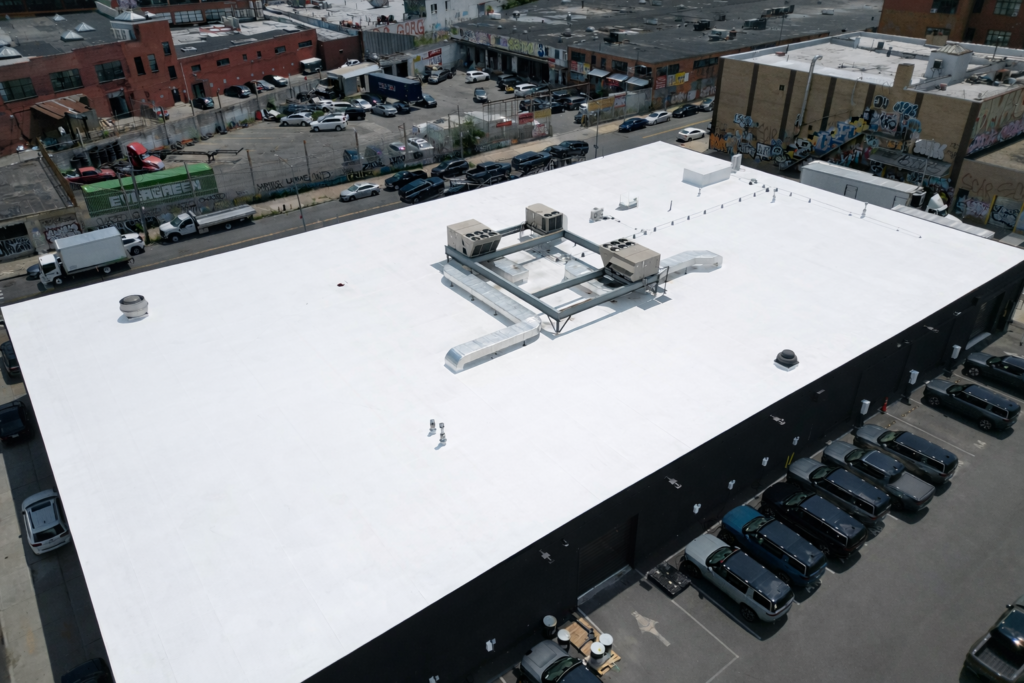
Commercial buildings often have larger roof areas, multiple penetrations, rooftop equipment, and complex drainage arrangements. As a result, identifying leaks may require a more comprehensive inspection strategy.
For property managers and business owners, an unresolved leak can affect interior finishes, stored inventory, equipment, and day-to-day operations. Additionally, water intrusion may disrupt tenants or require temporary restrictions in affected areas.
Therefore, commercial roof maintenance should include regular inspection, prompt investigation of recurring moisture, and appropriate drainage management.
A documented maintenance approach can also help property owners track previous repairs and identify patterns that may indicate a larger roofing issue.
When a commercial property requires professional attention, explore commercial roofing services from Elite Roofing & Waterproofing.
How Waterproofing Supports Long-Term Roof Protection
Leak detection identifies potential points of water entry, while waterproofing focuses on protecting vulnerable surfaces and building components from moisture intrusion.
Although these services are closely related, waterproofing is not a substitute for repairing an existing roof defect. Instead, the appropriate waterproofing strategy should complement a sound roofing system and address the specific exposure conditions of the property.
For example, certain roof assemblies or exterior building areas may benefit from suitable waterproofing systems when properly designed and installed. However, product selection must account for the substrate, drainage, compatibility, and intended application.
Furthermore, applying a coating over a damaged or unsuitable surface without proper preparation may fail to resolve the underlying problem.
Property owners can explore roofing and building waterproofing solutions to learn more about options for protecting vulnerable areas against moisture.
Preventive Maintenance Tips for Flat Roofs
Although professional inspections are important, routine maintenance also plays a valuable role in keeping a flat roof in good condition.
Keep drainage systems clear. First, arrange appropriate cleaning of drains, scuppers, and gutters so that rainwater can move away from the roof. However, avoid accessing the roof yourself if the surface is unsafe or the work requires specialized equipment.
Inspect visible flashing and seams. Next, look for obvious signs of deterioration from a safe location. If you notice separated seams, damaged flashing, or loose components, arrange a professional inspection rather than attempting an unsuitable repair.
Schedule periodic professional assessments. Furthermore, inspections can help identify developing problems before water enters the building. The appropriate frequency depends on the roof’s age, materials, exposure, and maintenance history.
Investigate interior warning signs. In addition, pay attention to recurring ceiling stains, peeling paint, damp odors, or unexplained moisture. These symptoms deserve investigation even when the roof looks intact.
Document maintenance and repairs. Finally, maintain records of inspections, previous leaks, completed repairs, and any recurring problems. This information can help a roofing professional understand the roof’s history and plan the next steps.
By combining routine maintenance with timely professional assessments, property owners can make better-informed decisions about roof care.
Why Choose Elite Roofing & Waterproofing?
Choosing a roofing contractor is an important decision because accurate diagnosis, appropriate materials, and careful workmanship all affect the success of a repair.
When evaluating Elite Roofing & Waterproofing for a Glen Cove roofing project, discuss the company’s experience with your specific roof type and the methods it recommends for identifying water intrusion.
Additionally, ask for a clear explanation of the findings, the proposed scope of work, and whether repair or replacement is the more practical option. A useful assessment should explain the suspected cause of the leak rather than simply recommend a generic repair.
Before authorizing the project, confirm the expected costs, schedule, relevant qualifications, insurance, warranty terms, and any necessary permits. Moreover, ask whether the work includes addressing related flashing, drainage, or waterproofing concerns.
Elite Roofing & Waterproofing offers services covering residential roofing, commercial roofing, roof repair, roof replacement, exterior building restoration, and waterproofing. Consequently, property owners can discuss different roofing needs and determine which services are appropriate for their particular situation.
For additional information, visit the Elite Roofing & Waterproofing website and explore the services relevant to your property.
Contact Elite Roofing & Waterproofing for Flat Roof Leak Detection in Glen Cove, NY
A flat roof leak should never be dismissed simply because the water appears in a small area or only after heavy rainfall. In fact, the visible signs may represent a much larger problem concealed beneath the roof surface.
Therefore, early investigation is an important step toward protecting your building. By identifying the likely source of water intrusion, evaluating the roof’s condition, and selecting appropriate repairs, you can address the problem more effectively.
Whether you own a residential property, manage a commercial building, or need help evaluating an aging roofing system, professional guidance can help you understand the available options.
Elite Roofing & Waterproofing provides roofing and waterproofing services for property owners exploring solutions for their buildings. The right approach will depend on the condition of your roof, the source of the leak, and the work required to restore reliable protection.
Ready to investigate a potential roof leak? Contact Elite Roofing & Waterproofing to discuss your roofing concerns and ask about the next steps for an assessment. Addressing a leak early can help you protect your property, plan necessary repairs, and maintain confidence in your roofing system.