
Walls do much more than support a building and define its interior spaces. They also help protect the property from rain, humidity, wind, and changing outdoor conditions. However, when moisture finds its way through cracks, deteriorated joints, or porous building materials, it can gradually damage the structure and interior finishes. Consequently, investing in the best wall waterproofing services in Glen Cove, NY can be an important step toward protecting your residential or commercial property.
In Glen Cove, New York, buildings experience changing seasonal conditions throughout the year. For example, heavy rain, winter precipitation, freezing temperatures, and repeated freeze-thaw cycles can place additional stress on exterior walls. Furthermore, poorly sealed openings and aging masonry can allow water to enter where the building envelope is vulnerable.
Fortunately, professional wall waterproofing can help reduce moisture intrusion when the correct products and methods are used. Elite Roofing & Waterproofing provides waterproofing and exterior restoration services designed to address building protection needs. Therefore, property owners can explore suitable solutions based on the condition of their walls, the source of moisture, and the materials involved.
Why Wall Waterproofing Matters for Glen Cove Properties
Water infiltration is not always immediately noticeable. Initially, it may appear as a small stain, peeling paint, or a damp patch near a window. Nevertheless, if the underlying problem remains unresolved, moisture can spread and affect other building materials.
For this reason, wall waterproofing should be considered a preventative maintenance measure as well as a potential response to existing moisture problems.
First, waterproofing helps reduce unwanted moisture entry. A suitable waterproofing system can protect vulnerable wall surfaces and joints from water penetration. As a result, the building may be better protected against weather-related moisture exposure.
Second, it helps preserve exterior finishes. Repeated exposure to water can damage paint, coatings, mortar joints, and other finishes. Therefore, identifying and treating vulnerable areas can help reduce avoidable deterioration.
Third, it supports interior protection. When moisture enters through exterior walls, it may affect drywall, insulation, flooring, and other interior materials. However, waterproofing the exterior alone may not resolve moisture that originates from plumbing leaks, condensation, or groundwater pressure. Consequently, identifying the source is essential.
Finally, wall waterproofing supports long-term maintenance planning. By addressing vulnerabilities before they become more extensive, property owners can make better-informed decisions about repairs and building preservation.
Common Signs Your Walls Need Waterproofing
Recognizing early warning signs can help property owners investigate problems before they become more expensive to address. Although one symptom does not always prove that water is entering through an exterior wall, several indicators deserve attention.
- Damp patches: Moist areas on interior or exterior walls may indicate water intrusion, plumbing problems, or condensation.
- Peeling paint or bubbling finishes: Moisture behind paint can cause the surface to lose adhesion. However, improper preparation and other conditions may also contribute.
- White powdery deposits: Efflorescence can appear when water carries dissolved salts through masonry and leaves them behind as it evaporates.
- Cracks in masonry or exterior finishes: Cracks can create pathways for water, especially when combined with deteriorated joints or exposed edges.
- Musty odors: Persistent musty smells may indicate a moisture problem in concealed areas, although the precise source requires investigation.
- Water stains near windows and doors: Damaged sealants, flashing, or poorly managed drainage may allow water to enter around openings.
If these symptoms appear repeatedly, it is wise to arrange an assessment. In addition, property owners should investigate whether the problem originates in the wall itself, the roof, the foundation, or another part of the building envelope.
What Causes Wall Water Intrusion?
Several conditions can contribute to water penetration. Therefore, successful waterproofing begins with understanding how moisture is reaching the wall.
| Common cause | Potential effect | Recommended approach |
| Cracked masonry or concrete | Water may enter through openings | Inspect cracks and determine the appropriate repair |
| Deteriorated mortar joints | Rain can penetrate vulnerable masonry joints | Repair damaged joints and apply compatible protection where appropriate |
| Failed window or door sealants | Moisture may enter around openings | Inspect sealants, flashing, and surrounding materials |
| Poor drainage | Water may collect near walls or foundations | Improve drainage and redirect water where necessary |
| Damaged exterior coatings | Exposed wall materials may absorb moisture | Repair the surface and select a compatible coating system |
| Roof or flashing defects | Water may travel down walls from above | Inspect the roof, flashing, and wall intersections |
| Condensation or plumbing leaks | Interior dampness may resemble exterior water intrusion | Investigate indoor humidity and plumbing systems |
Importantly, these problems require different solutions. For instance, applying a waterproof coating will not correct a leaking pipe or a defective roof flashing detail. Consequently, a proper diagnosis helps prevent repeated repairs that fail to address the underlying cause.
Frequently Asked Questions About Wall Waterproofing
1. What are the best wall waterproofing services for a home?
The best service depends on the wall material, the source of moisture, and the severity of the problem. For example, masonry may require joint repairs and a compatible water-repellent treatment, while a wall with recurring leaks around windows may need sealant or flashing repairs. Therefore, an inspection should guide the recommendation.
2. How do I know if my exterior walls need waterproofing?
Look for recurring dampness, deteriorating paint, efflorescence, visible cracks, or water stains near openings. However, these symptoms can have several causes. A professional assessment can help determine whether exterior waterproofing, drainage improvements, or another repair is needed.
3. Can wall waterproofing stop existing leaks?
It can help address certain types of water intrusion, provided the underlying cause is identified and the correct system is used. Nevertheless, active leaks caused by damaged flashing, plumbing, or significant structural defects must be addressed directly rather than simply covered with a waterproof coating.
4. How long does wall waterproofing last?
The service life depends on the product, surface preparation, wall material, weather exposure, and maintenance. Consequently, property owners should ask about the expected performance of the proposed system and follow the manufacturer’s maintenance recommendations.
5. Is waterproofing necessary for both residential and commercial buildings?
Both property types can benefit from appropriate moisture protection. However, their requirements may differ according to wall construction, building size, occupancy, exposure, and maintenance needs. Therefore, the waterproofing approach should be selected for the specific property.
6. Can waterproofing prevent mold?
Reducing unwanted moisture can help address one of the conditions that allows mold to grow. However, waterproofing does not remove existing mold or correct every source of indoor moisture. Any existing growth and its moisture source should be assessed and addressed appropriately.
Types of Wall Waterproofing Solutions
Not every wall requires the same waterproofing method. Instead, the right approach depends on the construction material, the source of water, and the condition of the surface.
Exterior Waterproof Coatings
Exterior waterproof coatings can help reduce water penetration through suitable wall surfaces. Depending on the product, they may form a protective barrier or provide water repellency while allowing an appropriate level of vapor transmission.
However, product compatibility matters. For example, a coating designed for one masonry surface may not be suitable for every painted, rendered, or previously treated wall. Therefore, the surface should be evaluated before application.
Masonry Joint and Crack Repairs
Cracked mortar joints and damaged masonry can provide direct pathways for water. Consequently, repairing these defects may be an important part of a waterproofing project.
Nevertheless, not every crack can be treated in the same way. Some may be superficial, while others may indicate movement or a more significant building issue. Therefore, the repair method should reflect the cause and extent of the damage.
Sealant and Flashing Improvements
Windows, doors, balconies, and wall intersections often contain joints where different materials meet. Over time, sealants can deteriorate, while flashing may become damaged or improperly connected.
As a result, water can enter through these vulnerable details even when the surrounding wall appears to be in good condition. Inspecting and repairing these connections can therefore be essential to an effective waterproofing strategy.
Foundation and Below-Grade Waterproofing
Walls below ground level may experience moisture from surrounding soil or groundwater. In such cases, surface coatings alone may not provide adequate protection.
Depending on the conditions, the project may require below-grade waterproofing, drainage improvements, crack repair, or other specialized measures. Moreover, water pressure and soil conditions must be considered when selecting the appropriate system.
For broader building protection needs, Elite Roofing & Waterproofing offers professional waterproofing services that property owners can explore when evaluating moisture-related concerns.
The Professional Wall Waterproofing Process
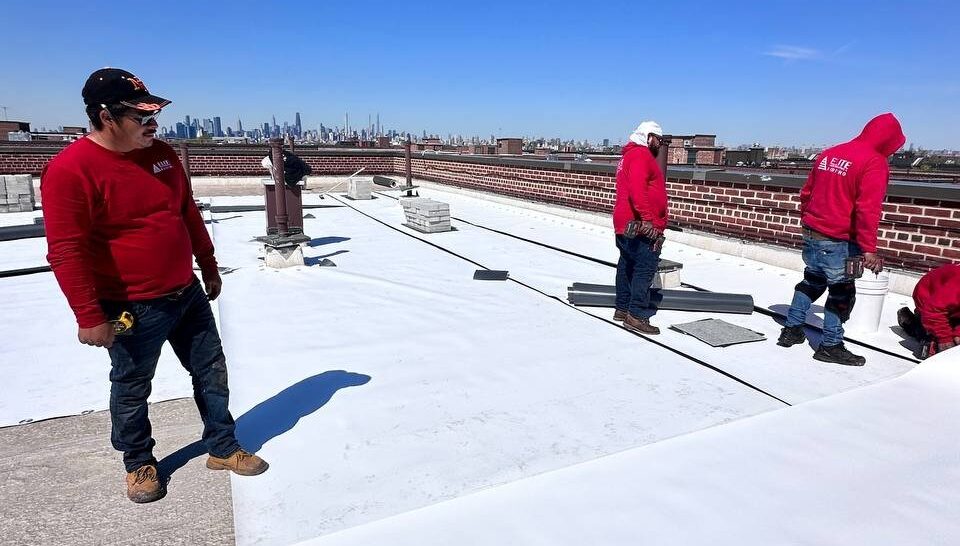
A successful waterproofing project requires more than applying a product to a wall. Instead, each stage should help ensure that the selected solution addresses the actual problem.
Step 1: Inspect the Building and Identify Moisture Sources
First, the contractor evaluates the affected walls and surrounding building components. This may include examining cracks, mortar joints, window and door openings, roof intersections, drainage conditions, and visible signs of water entry.
In addition, the inspection should consider whether the moisture could be originating indoors or from below ground level. This step helps narrow down the likely cause before repairs begin.
Step 2: Select the Appropriate Waterproofing Method
Next, the recommended approach should match the building material and exposure conditions. For example, a masonry wall may require joint repairs and a compatible protective treatment, whereas a wall affected by groundwater may need a more comprehensive below-grade solution.
Consequently, selecting the correct system is more important than simply choosing the product marketed as the strongest.
Step 3: Prepare the Wall Surface
Before application, the surface may need cleaning, removal of loose material, repair of cracks, and preparation according to the manufacturer’s specifications.
Furthermore, the wall may need to dry sufficiently before certain products can be applied. If the surface is contaminated or unsuitable, the waterproofing system may not adhere or perform as intended.
Step 4: Complete Necessary Repairs
After preparation, damaged areas should be repaired using materials appropriate for the wall assembly. This may include addressing deteriorated mortar, failed sealants, cracks, or defective flashing.
However, significant structural cracks or recurring movement may require further investigation before cosmetic repairs or coatings are applied.
Step 5: Apply the Waterproofing System
Once the surface and underlying defects are ready, the selected treatment can be installed according to its technical requirements. Application thickness, curing time, temperature, and moisture conditions can all affect performance.
Therefore, following the product specifications is essential to achieving the intended result.
Step 6: Review the Work and Plan Maintenance
Finally, the completed work should be checked for visible defects and appropriate coverage. Property owners should also receive guidance about maintenance, inspections, and any limitations associated with the waterproofing system.
As a result, they can better understand how to maintain the treated wall and when additional attention may be necessary.
Wall Waterproofing vs. Exterior Building Restoration
Wall waterproofing and exterior building restoration are closely related, but they do not necessarily involve the same work. Waterproofing focuses on reducing moisture penetration, while restoration may address a broader range of deterioration affecting exterior materials and building components.
| Consideration | Wall waterproofing | Exterior building restoration |
| Primary objective | Reduce water entry through suitable wall systems | Repair and preserve deteriorated exterior building components |
| Typical work | Waterproof treatments, compatible sealants, and moisture-related repairs | Surface repairs, masonry restoration, and other exterior rehabilitation work |
| Best suited for | Walls with identified moisture vulnerabilities | Buildings with broader exterior deterioration |
| May include | Selected crack and joint repairs | Waterproofing when appropriate to the project |
| Key consideration | Correct diagnosis and product compatibility | Overall condition and restoration requirements |
In practice, a project may require both approaches. For example, deteriorated masonry may need repair before a waterproofing treatment can be applied effectively. Therefore, assessing the wall and the broader exterior helps determine the proper scope of work.
Property owners can learn more about exterior building restoration services when the problem involves damaged exterior materials as well as moisture intrusion.
Benefits of Hiring Professional Wall Waterproofing Services
Although some minor maintenance tasks may be manageable independently, effective waterproofing often requires a clear understanding of building materials and moisture movement.
Accurate problem identification: First, a professional assessment can help distinguish exterior water penetration from condensation, plumbing leaks, or roof-related problems. Consequently, repairs are more likely to address the correct source.
Suitable material selection: Different walls respond differently to waterproofing products. Therefore, professional guidance can help avoid incompatible treatments that trap moisture or fail to bond properly.
Better surface preparation: Furthermore, appropriate cleaning and repairs help create suitable conditions for the selected waterproofing system.
Protection of building finishes: By reducing moisture entry where the treatment is effective, waterproofing may help preserve paint, masonry, and other finishes.
A more organized maintenance plan: Finally, a professional can explain which areas require ongoing inspection and whether related repairs should be prioritized.
Nevertheless, no waterproofing system can guarantee that a building will never experience moisture problems. Instead, the goal is to reduce identified vulnerabilities through suitable installation, maintenance, and timely repairs.
How Wall Waterproofing Connects With Roof Protection
Water does not always enter through the wall surface itself. In some cases, damaged roof edges, deteriorated flashing, or defective connections between the roof and wall allow moisture to travel into the building envelope.
Therefore, recurring wall stains near ceilings or upper floors should prompt an inspection of the roof and its associated components.
Elite Roofing & Waterproofing offers commercial roofing services for business properties and residential roofing services for homes. These services may be relevant when roof conditions contribute to wall moisture.
Similarly, if an inspection identifies roof damage, professional roof repair services may help address the source. When the existing roof has widespread deterioration, roof replacement services may also need to be considered.
Ultimately, examining the full building envelope can help property owners avoid treating the visible symptom while leaving the source of water intrusion unresolved.
How to Choose the Best Wall Waterproofing Contractor in Glen Cove, NY
Choosing a contractor is an important part of protecting your property. Therefore, property owners should evaluate the proposed work carefully before making a decision.
Look for a detailed inspection: A suitable contractor should examine the affected area and investigate potential moisture sources rather than automatically recommending the same treatment for every wall.
Ask about product compatibility: The proposed system should be appropriate for the wall’s material, condition, and exposure. In addition, the contractor should explain any preparation or repair requirements.
Request a clear written estimate: The estimate should outline the planned work, surface preparation, repairs, materials, and any relevant exclusions. Consequently, it becomes easier to compare proposals fairly.
Discuss maintenance and warranty terms: Ask what maintenance is required and which warranty terms apply. Since coverage varies by product and contractor, obtain the details in writing.
Consider the entire moisture problem: Finally, make sure the recommendation addresses the likely source of water. If the issue involves drainage, roofing, or below-grade moisture, treating only the visible wall surface may not be sufficient.
By following these steps, property owners can make a more informed choice and establish realistic expectations for the work.
Contact Elite Roofing & Waterproofing for Wall Waterproofing Services
Moisture intrusion can gradually affect exterior finishes, interior materials, and the long-term condition of a building. However, identifying the source early and choosing the correct waterproofing method can help reduce further deterioration.
For property owners seeking the best wall waterproofing services in Glen Cove, NY, Elite Roofing & Waterproofing offers waterproofing, roofing, and exterior restoration services to help address a range of building protection needs.
Whether your property has recurring damp patches, deteriorating masonry joints, or vulnerable exterior wall surfaces, begin with an assessment of the affected areas. Then, discuss the most appropriate solution based on the wall material, moisture source, and condition of the building.
Contact Us: Visit the Elite Roofing & Waterproofing contact page to discuss your project and request further information about available services.
With proper diagnosis, compatible materials, and appropriate maintenance, wall waterproofing can become a valuable part of a practical building preservation strategy.