
Choosing the best flat roof for warehouses in Glen Cove, NY, is an important decision for property owners who want dependable protection, long-term performance, and manageable maintenance costs. A warehouse roof must do much more than cover the building. It must protect valuable inventory, equipment, employees, and daily business operations from rain, snow, wind, moisture, and changing seasonal temperatures.
However, not every flat roofing system performs equally well in every commercial environment. Some materials offer excellent flexibility, while others provide strong resistance to standing water, punctures, or specific chemical exposures. Therefore, warehouse owners should evaluate their building’s structure, drainage requirements, insulation needs, and operating conditions before choosing a roofing system.
In Glen Cove, NY, seasonal weather makes these considerations especially important. For example, winter snow and freezing temperatures can place additional demands on a flat roof. Meanwhile, heavy rainfall and coastal moisture can expose weaknesses in drainage systems, seams, flashing, and waterproofing details.
Fortunately, several commercial roofing systems can provide dependable protection when properly designed and installed. Elite Roofing & Waterproofing helps property owners explore commercial roofing solutions suited to their building requirements. By understanding the advantages and limitations of each material, you can make a more informed investment in your warehouse.
Why Choosing the Right Flat Roof for a Warehouse Matters
Warehouses often cover large areas, which means a roofing problem can affect a substantial portion of the building. Furthermore, even a relatively small leak can damage stored products, interrupt operations, and create unexpected repair expenses.
Consequently, selecting the right roofing system should be a strategic business decision rather than simply a search for the lowest installation price.
A suitable warehouse roof should provide:
- Reliable waterproofing: Protects inventory, structural components, and interior spaces from moisture intrusion.
- Weather resistance: Helps the building withstand local rain, wind, snow, and temperature changes.
- Durability: Supports long-term performance under normal operating conditions.
- Energy efficiency: Works with appropriate insulation to help regulate indoor temperatures.
- Practical maintenance: Allows property managers to inspect, maintain, and repair the roof efficiently.
- Cost-effective ownership: Balances initial installation expenses with expected maintenance and replacement costs.
Additionally, the roof should accommodate rooftop equipment, ventilation systems, skylights, and other penetrations. Otherwise, even a high-quality membrane may experience problems around poorly designed details.
For warehouse owners evaluating their options, professional commercial roofing services from Elite Roofing & Waterproofing can help establish the most appropriate next steps.
What Is the Best Flat Roof for Warehouses in Glen Cove, NY?
There is no single roofing material that is automatically the best choice for every warehouse. Instead, the ideal system depends on the building’s design, roof condition, budget, drainage performance, and exposure to environmental conditions.
Nevertheless, several roofing systems are commonly considered for commercial warehouses, including TPO, PVC, EPDM, modified bitumen, and built-up roofing.
1. TPO Roofing: A Popular Choice for Large Warehouse Roofs
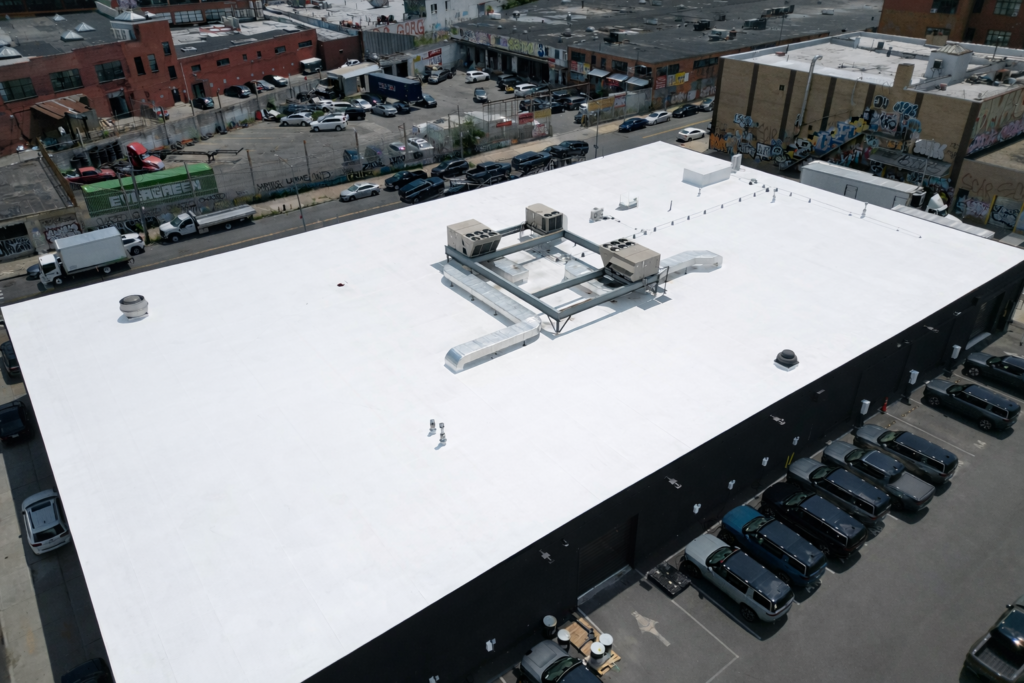
<text>Thermoplastic polyolefin, commonly known as TPO, is a single-ply roofing membrane widely used on commercial flat and low-slope roofs. It is often selected because many TPO products feature reflective surfaces, heat-welded seams, and relatively lightweight construction.</text>
For warehouses with substantial roof areas, TPO may offer an attractive balance between performance and installation cost. Moreover, its reflective surface can help reduce solar heat absorption during warmer weather.
However, TPO products differ in formulation, thickness, and performance characteristics. Therefore, property owners should compare manufacturer specifications and warranty requirements instead of assuming that every TPO membrane offers the same durability.
Best suited for: Warehouses seeking a reflective, single-ply roofing option with competitive lifecycle potential.
2. PVC Roofing: Strong Waterproofing and Chemical Resistance
Polyvinyl chloride, or PVC, is another single-ply membrane used for commercial roofing. It features heat-welded seams and offers resistance to many chemicals, making it a potential option for warehouses with certain specialized operating conditions.
Additionally, many PVC membranes have reflective finishes that may help reduce rooftop temperatures. Nevertheless, chemical compatibility should always be confirmed with the manufacturer, especially when the building has exposure to industrial substances.
PVC may have a higher initial material cost than some alternatives. However, the additional expense may be worthwhile when its specific performance characteristics match the warehouse’s requirements.
Best suited for: Warehouses that need strong seam performance, reflective options, or resistance to particular chemical exposures.
3. EPDM Roofing: Flexible Performance in Changing Temperatures
Ethylene propylene diene monomer, known as EPDM, is a synthetic rubber roofing membrane used on commercial flat roofs. Its flexibility makes it an option worth considering in environments that experience seasonal temperature changes.
EPDM is commonly available in black and white versions. Black EPDM absorbs more solar heat, while white versions can provide a more reflective surface, depending on the specific product.
However, EPDM installation methods differ from heat-welded thermoplastic membranes. Consequently, seam construction, adhesive compatibility, flashing, and workmanship must receive careful attention.
Best suited for: Warehouses where flexibility, established roofing technology, and appropriate long-term maintenance are important considerations.
4. Modified Bitumen Roofing: A Multi-Layer Roofing Option
Modified bitumen roofing uses asphalt-based materials enhanced with polymers to improve flexibility and performance. Depending on the system, installation may involve torch application, adhesives, or other approved methods.
Because it uses a multi-layer approach, modified bitumen can provide a robust roofing assembly for suitable commercial buildings. Nevertheless, installation requirements, fire safety procedures, roof weight, and maintenance needs should be evaluated carefully.
Furthermore, the quality of the substrate and the detailing around drains and roof penetrations can influence overall performance.
Best suited for: Warehouses where a multi-layer asphalt-based roofing assembly fits the building’s design and operating requirements.
5. Built-Up Roofing: Traditional Multi-Layer Protection
Built-up roofing, often called BUR, consists of multiple layers of bitumen and reinforcing materials, typically finished with a suitable protective surface.
This type of system can provide a substantial roofing assembly. However, it may be heavier than some single-ply alternatives, and installation can involve additional labor and material handling.
Therefore, warehouse owners should consider structural capacity, installation logistics, and future maintenance before selecting built-up roofing.
Best suited for: Buildings where a multi-layer roofing design is appropriate and the structure can support the proposed assembly.

Frequently Asked Questions About the Best Flat Roof for Warehouses
What is the best flat roofing material for a warehouse in Glen Cove, NY?
TPO, PVC, and EPDM are all worth considering for many warehouse applications. However, the best choice depends on roof design, drainage, chemical exposure, insulation, budget, and manufacturer requirements. A property-specific assessment is the best way to compare suitable options.
Is TPO or PVC better for a warehouse roof?
TPO may appeal to owners seeking a reflective single-ply system with competitive pricing, while PVC may be preferable where certain chemical exposures or specific membrane characteristics are important. However, product quality, installation, and the building’s operating conditions should determine the final choice.
Can a flat warehouse roof handle snow in New York?
A properly designed flat or low-slope roof can be engineered for applicable local snow loads. Nevertheless, structural capacity, drainage, roof design, and maintenance are critical. Property owners should not assume that a flat roof can support unlimited snow accumulation.
How long does a commercial flat roof last?
Service life varies by material, installation quality, maintenance, weather exposure, and the condition of the underlying roof assembly. Many commercial systems are designed for service periods measured in decades, but the actual lifespan depends on the specific product and conditions.
Does a warehouse flat roof need regular maintenance?
Yes. Regular inspections help identify blocked drains, damaged flashing, punctures, deteriorating seams, and other problems before they become more serious. Additionally, inspections after severe weather can help property managers identify damage promptly.
Can an existing warehouse roof be covered with a new membrane?
Sometimes. An overlay may be possible if the existing roof assembly is dry, structurally suitable, and permitted by applicable building codes. However, wet insulation, damaged decking, excessive existing layers, or other concerns may require removal and replacement.
What Warehouse Owners Should Consider Before Choosing a Flat Roof
Although comparing materials is important, the roofing membrane is only one component of a complete roofing system. Therefore, warehouse owners should evaluate the entire roof assembly before approving a project.
| Selection factor | Why it matters | What to evaluate |
| Roof size | Influences material quantities and labor | Total square footage and layout |
| Existing roof condition | Determines whether repairs or removal are necessary | Moisture, damage, and structural concerns |
| Local weather | Affects material and drainage requirements | Snow, rain, wind, and temperature changes |
| Drainage design | Helps prevent water accumulation | Drains, slopes, and water flow |
| Insulation | Influences energy performance and condensation control | Thermal requirements and existing assembly |
| Rooftop equipment | Creates penetrations and maintenance access needs | HVAC units, vents, and service pathways |
| Chemical exposure | May influence membrane selection | Cleaning agents, oils, and industrial substances |
| Budget | Affects upfront and long-term affordability | Installation, maintenance, and expected replacement |
| Warranty | Establishes specific coverage and conditions | Product, workmanship, and maintenance requirements |
For example, a warehouse storing sensitive products may prioritize insulation and moisture protection. Meanwhile, a facility with frequent rooftop maintenance activity may need additional protection against accidental punctures.
Similarly, a building with many rooftop units requires careful flashing and access planning. As a result, the best roofing solution should reflect the building’s actual operational demands.
Why Drainage Is Essential for Flat Warehouse Roofing
A flat roof is not necessarily completely level. In fact, most properly designed flat roofing systems incorporate slopes that direct water toward designated drains or drainage outlets.
Without effective drainage, water may collect in low areas. Over time, persistent ponding can increase the demands on the roof assembly and reveal weaknesses in seams, flashing, or other details.
Furthermore, blocked drains can prevent rainwater from leaving the roof efficiently. Leaves, dirt, debris, and maintenance materials may all restrict water flow.
To support better drainage performance, property managers should:
- Inspect drains and scuppers regularly.
- Remove accumulated debris using appropriate maintenance procedures.
- Check for areas where water repeatedly collects.
- Monitor flashing around drains and roof penetrations.
- Arrange professional assessment when drainage problems persist.
- Ensure any proposed drainage changes comply with applicable requirements.
Importantly, drainage improvements may involve more than cleaning. In some cases, the roof may need corrected slopes, additional drainage capacity, or repairs to the existing assembly.
Consequently, drainage should be considered during both new roof installation and replacement planning.
How Insulation Improves Warehouse Roof Performance
Roof insulation helps control heat transfer between the interior and exterior of a building. For warehouses, this can be especially important when temperature control affects employees, stored goods, or operational equipment.
However, insulation requirements vary significantly. A warehouse used for general storage may have different needs from a temperature-controlled distribution facility.
Appropriate insulation can help reduce heating and cooling demand. In addition, a properly designed assembly can help manage condensation risks when vapor control, air leakage, and indoor humidity are addressed correctly.
Nevertheless, insulation alone cannot compensate for poor waterproofing or inadequate ventilation and moisture management.
Therefore, property owners should evaluate the membrane, insulation, air and vapor control layers, and existing roof structure as a complete system. Moreover, the final assembly should meet applicable energy codes and manufacturer requirements.
How Much Does a Flat Warehouse Roof Cost in Glen Cove, NY?
The cost of a commercial flat roof depends on several variables. Because warehouses differ in size, access, roof condition, and material requirements, an accurate estimate requires an inspection and a clear project scope.
| Cost factor | Potential effect on project pricing |
| Roofing material | Different membranes and assemblies have different material costs |
| Roof dimensions | Larger areas generally require more materials and labor |
| Removal of existing roofing | Tear-off and disposal can increase project costs |
| Insulation upgrades | Additional insulation and cover boards affect the budget |
| Drainage improvements | New drains or tapered insulation may add expenses |
| Roof penetrations | HVAC units, vents, and skylights require detailed work |
| Structural repairs | Damaged decking or other components may require correction |
| Site access | Limited access may increase equipment and labor requirements |
| Warranty specifications | Certain coverage options require particular materials or installation standards |
For example, installing a new membrane over a sound, suitable substrate may involve less preparation than replacing a roof with widespread moisture damage. However, the less expensive initial option is not always the most economical over the roof’s full service life.
Therefore, request a written estimate that identifies the recommended system, preparation work, insulation, drainage details, and warranty terms. Additionally, compare proposals based on the complete scope rather than the total price alone.
Warning Signs Your Warehouse Roof Needs Repair or Replacement
Commercial roof problems often begin with small signs that are easy to overlook. Nevertheless, identifying these issues early may help reduce the risk of interior damage and business disruption.
Common warning signs include:
- Water stains on ceilings or interior walls.
- Repeated leaks after rainfall.
- Loose, damaged, or deteriorating membrane seams.
- Punctures or tears in the roofing surface.
- Blocked drains or persistent ponding.
- Damaged flashing around rooftop equipment.
- Wet insulation or unexplained increases in moisture.
- Visible deterioration around roof edges.
- Recurring repairs in the same locations.
However, a visible leak does not always reveal the exact entry point. Water can travel along the roof assembly before appearing inside the building. Therefore, a professional inspection can help identify the source rather than simply treating the visible stain.
If the damage is localized, commercial roof repair services may be appropriate. Conversely, when the roofing system has widespread deterioration or has reached the end of its useful life, commercial roof replacement services may provide a more suitable long-term solution.
Maintenance Strategies to Extend the Life of a Warehouse Roof
After installation, ongoing maintenance is essential for protecting your investment. Although modern roofing materials can offer excellent durability, no system is entirely maintenance-free.
First, schedule regular roof inspections to identify developing problems. Next, ensure drains and other drainage components remain clear. Additionally, inspect seams, flashing, roof edges, and penetrations for visible damage.
Property managers should also coordinate rooftop access with HVAC contractors and other service providers. Otherwise, equipment servicing may accidentally puncture the membrane or damage flashing.
Furthermore, document inspection findings and completed repairs. Keeping records can help identify recurring issues, plan future budgets, and support applicable warranty requirements.
Following severe weather, arrange an assessment when damage is suspected. However, warehouse employees should never climb onto a roof without appropriate authorization, fall protection, and training.
For properties experiencing broader moisture problems, professional waterproofing services may also be relevant. In addition, deterioration affecting walls, facades, or other exterior components may require exterior building restoration services.
Why Choose Elite Roofing & Waterproofing for Warehouse Roofing?
Choosing a commercial roofing contractor involves more than selecting a company that installs membranes. Warehouse owners also need to understand the condition of their existing roof, the recommended roofing assembly, and the maintenance requirements associated with the proposed system.
Elite Roofing & Waterproofing provides commercial roofing and related exterior protection services for property owners evaluating roofing needs.
When reviewing a proposal, ask for clear information about the selected material, membrane thickness, insulation, drainage design, flashing details, installation method, and warranty requirements. Furthermore, confirm how the contractor plans to address